Menu

Ultimate Bhutan Photography Tour: Best Places and Tips

photography and wildlife.
Photography.

Photography Tour in Bhutan: A Guide to Birds, Culture and Landscapes

A Photography Tour in Bhutan offers much more than beautiful scenery.

Additionally, this Himalayan kingdom offers rare birds, pristine forests, dramatic passes, colorful festivals, traditional architecture and rooted Buddhist culture.

Photography Tour in Bhutan offers photographers opportunities to capture Himalayan wildlife, ancient monasteries, village life, and sweeping mountain landscapes across Bhutan’s diverse valleys and cultural terrain. From sunrise glow on snowcapped peaks to quiet monasteries perched on cliff sides, it provides a range of light and subjects for skillful photography.

Moreover, traveling with an experienced local guide helps you reach promising locations at the right time while respecting Bhutan’s people, wildlife, and sacred places, and it offers insights into cultural contexts that enrich your photographs for your portfolio and storytelling.

Whether you are a beginner, an experienced travel photographer or a dedicated bird photographer, a Bhutan photography tour can be customized around your interests and preferred pace.

Bhutan tour.
Bhutan tour.

Why choose a photography tour in Bhutan?

Bhutan’s remarkable variety of habitats is one of its greatest attractions. A single journey can pass through subtropical forests, broad river valleys, temperate woodlands and high alpine environments.

Some of the most rewarding subjects include:

  • Rare Himalayan birds and other wildlife
  • Snow-covered mountains and high passes
  • Traditional dzongs, monasteries and temples
  • colorful prayer flags and religious monuments
  • Rural villages, farms and traditional houses
  • Masked dances at Bhutanese festivals
  • Local crafts, archery and everyday life
  • Forests, waterfalls and fast-flowing rivers

Bhutan is particularly suitable for photographers who enjoy traveling slowly. Instead of rushing between attractions, a private journey allows time to observe the light, wait for wildlife and understand each location.

Bird photography in Bhutan

Best bird photography tour in Bhutan with Langur Eco travels

Bhutan is one of the finest bird-watching destinations in the Eastern Himalayas. Its extensive forests and wide range of elevations support more than 700 recorded bird species.

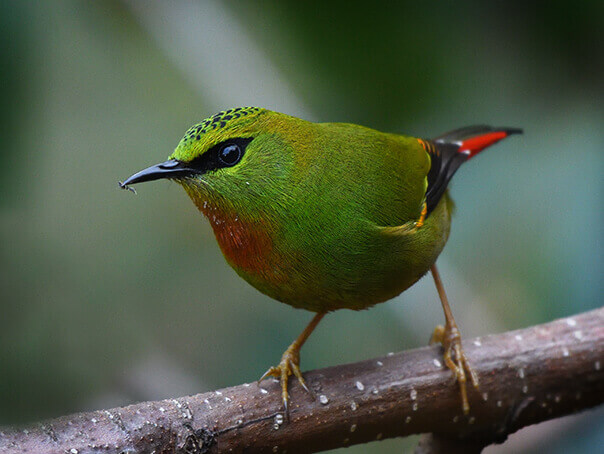
Depending on the season and itinerary, photographers may search for Himalayan Monal, Blood Pheasant, Satyr Tragopan, Rufus-necked horn-bill, Beautiful Nuthatch, Ward’s Trogon and many other Himalayan specialties.

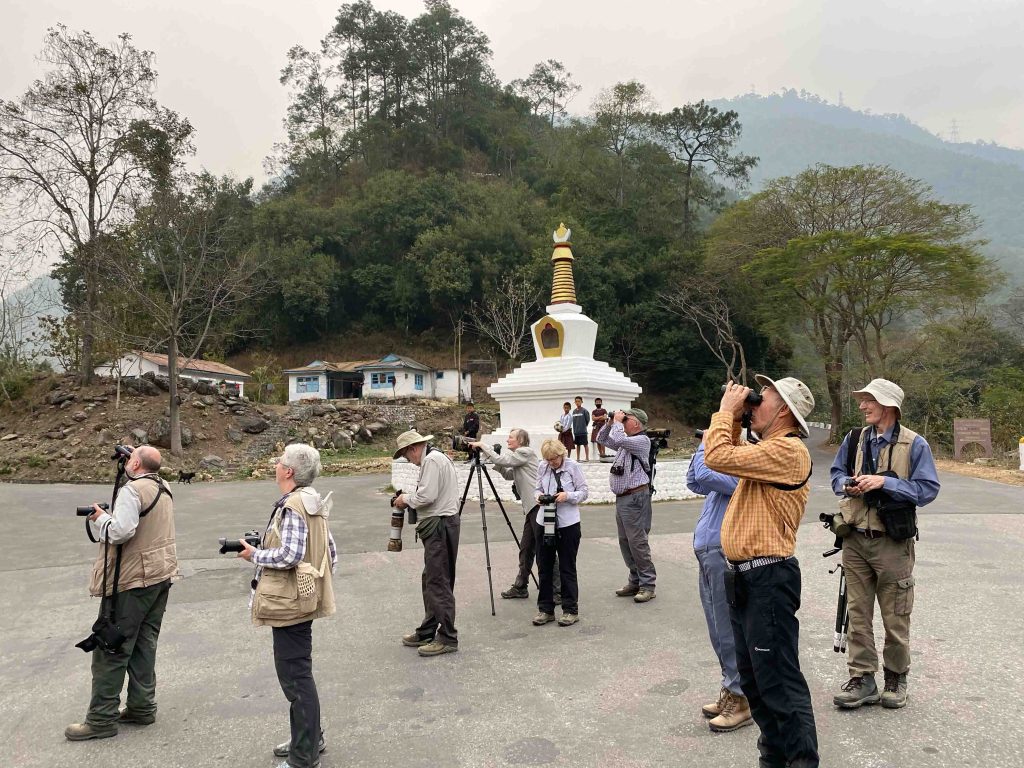
Successful bird photography requires patience, responsible positioning and detailed knowledge of local habitats. Experienced Bhutanese birding guides can identify calls, understand seasonal movements and locate productive areas while minimizing disturbance to birds.

Photographers interested primarily in wildlife can explore our bird photography tour in Bhutan.

Best places for photography in Bhutan

Paro Valley

Paro is often a visitor’s first introduction to Bhutan. The valley contains traditional farmhouses, cultivated fields, forested mountains and important historical monuments.

Rinpung Dzong, the Paro River and surrounding viewpoints offer excellent architectural and landscape photography. The hike to Tiger’s Nest Monastery also provides one of Bhutan’s most recognizable mountain scenes.

Early morning and late afternoon generally offer softer light across the valley.

Thimphu

Bhutan’s capital combines traditional culture with a growing modern city. Photographic subjects include monasteries, markets, crafts, traditional dress, archery and panoramic viewpoints.

Thimphu is a good location for cultural and documentary photography. However, photographers should always ask permission before taking close portraits of local people.

Punakha

Punakha is warmer and more subtropical than Paro and Thimphu. Its terraced fields, rivers and traditional villages produce very different photographic conditions.

Punakha Dzong is one of the country’s most impressive architectural subjects. It stands at the confluence of the Pho Chhu and Mo Chhu rivers, surrounded by forested hills.

The valley is especially attractive when jacaranda trees flower around the dzong and when the surrounding agricultural fields are green.

Phobjikha Valley

Phobjikha is a broad glacial valley surrounded by forested mountains. Its open landscapes, traditional villages and peaceful atmosphere make it an outstanding location for environmental photography.

During winter, the valley is also associated with the Black-necked Crane. Wildlife photographers must maintain a respectful distance and follow guidance around crane habitats.

Bumthang

Bumthang is often described as Bhutan’s spiritual heartland. Its valleys contain ancient temples, monasteries, villages and agricultural landscapes.

The region is ideal for photographers interested in religious heritage, rural life and environmental portraits. traveling beyond the main towns also reveals quieter landscapes with fewer visitors.

Eastern Bhutan

Eastern Bhutan is especially valuable for dedicated bird and wildlife photographers. Its mountain roads pass through exceptionally diverse forests at different elevations.

Areas around Yongkola are renowned for Himalayan bird-life. Spending several days in one region gives photographers better opportunities than moving to a different location every day.

When is the best time for photography in Bhutan?

The best season depends on what you want to photograph.

Spring: March to May

Spring is excellent for active bird-life, flowering plants, green landscapes and several important festivals. Forest photography can be particularly rewarding during this period.

Mountain weather can change quickly, so photographers should prepare for both clear conditions and occasional rain.

Autumn: September to November

Autumn often offers clear skies, colorful festivals and attractive mountain views. Harvested fields and village activity can also provide strong cultural subjects.

This is a popular season, so accommodation and flights should be arranged early.

Winter can provide clear skies, quieter tourist sites and distinctive migratory birds. Mornings at higher elevations may be very cold, but lower valleys can remain comfortable during the day.

Responsible photography in Bhutan

Respect is essential when photographing Bhutan’s people, wildlife and religious heritage.

Always ask before taking close portraits. Photography may be restricted inside temples, monasteries and other sacred spaces, so follow signs and the instructions of your guide.

Wildlife photographers should avoid approaching nests, using methods that cause distress or repeatedly disturbing an animal for a photograph. Maintaining natural behavior is more important than obtaining a particular image.

A responsible approach creates better experiences for photographers, local communities and wildlife.

Frequently asked questions

Do I need to be a professional photographer?

No. A photography tour can be designed for beginners, enthusiasts or experienced photographers. You only need an interest in Bhutan and a desire to improve your images.

Can I combine bird and cultural photography?

Yes. Bhutan is well suited to combined journeys. Forest birding sessions can be balanced with monasteries, festivals, villages and landscape locations.

Can I arrange a private tour?

Yes. A private itinerary offers the greatest flexibility for photography stops, preferred subjects and daily timing.

Is photography permitted inside monasteries?

Rules differ between locations, and photography may be prohibited inside sacred buildings. Always check with your guide and ask permission before using your camera.

How long should a photography tour be?

A shorter journey can cover western Bhutan, while a longer itinerary provides time to visit central or eastern regions. Longer tours are generally better for dedicated bird and wildlife photography.

Start planning your photography tour in Bhutan

Bhutan rewards photographers who are willing to travel patiently and observe carefully. From rare Himalayan birds and ancient dzongs to remote valleys and traditional village life, every region offers a different visual story.

Langur Eco Travels has organized specialist journeys throughout Bhutan since 2006. Our local team can customize a photography tour in Bhutan around your interests, preferred dates and travel style.

Contact Langur Eco Travels to begin planning your Bhutan photography journey.

Largest Cities in Bhutan: Complete Travel Guide to Bhutan’s Major Cities

Bhutan is famous for its peaceful valleys, Himalayan landscapes, Buddhist monasteries, traditional architecture, and unique approach to tourism. When planning a trip, understanding the largest cities in Bhutan can help travelers decide where to stay, which places to visit, and how to create a practical itinerary. Unlike many countries, Bhutan does not have huge metropolitan areas. Its cities and towns are generally compact, scenic, and closely connected with surrounding mountains, forests, rivers, monasteries, villages, and cultural sites.

Thimphu is by far the largest urban centre, followed by Phuntsholing, Paro, Gelephu, Samdrup Jongkhar, and several smaller but culturally important towns. The 2017 population data shows that Bhutan’s urban settlements remain relatively small compared with cities elsewhere in South Asia. Thimphu and Phuntsholing are the only two cities that exceeded 10,000 residents in that census, highlighting how different Bhutan’s urban landscape is from neighboring countries.

For travelers interested in nature and birdwatching, city size is only one part of the story. The location of each city matters just as much. Some cities provide access to Himalayan valleys, while others are gateways to subtropical forests, eastern Bhutan, cultural sites, or international borders. Langur Eco Travels helps travelers experience Bhutan beyond ordinary sightseeing, with opportunities to explore the country’s natural landscapes and remarkable birdlife through thoughtfully planned journeys.

Understanding the Largest Cities in Bhutan

Bhutan’s cities are better understood as regional centres rather than giant urban destinations. The country’s mountainous geography naturally limits large-scale urban expansion. Settlements have traditionally developed around river valleys, dzongs, trade routes, administrative centres, and strategic locations.

According to 2017 census figures, the leading urban centres included Thimphu with 114,551 people, Phuntsholing with 27,658, Paro with 11,448, Gelephu with 9,858, Samdrup Jongkhar with 9,325, and Wangdue Phodrang with 8,954. Punakha, Jakar, Nganglam, and Samtse were among the other larger towns.

These numbers are useful for understanding the scale of Bhutan’s cities, but they should not be interpreted as a ranking of tourist importance. A smaller town can be far more significant for a particular type of traveler. Paro, for example, is smaller than Phuntsholing but is one of the country’s most important destinations because it contains the international airport and provides access to famous cultural attractions.

Thimphu: The Largest City and Capital of Bhutan

Thimphu is the largest city in Bhutan and the country’s political, administrative, cultural, and commercial centre. Set in a mountain valley, it combines modern urban life with Bhutanese traditions in a way that feels very different from large cities elsewhere in Asia.

The city is home to government institutions, markets, restaurants, hotels, museums, monasteries, handicraft shops, and cultural attractions. At the same time, mountains surround the urban area, making it possible to enjoy scenic viewpoints and natural environments without traveling extremely far from the city centre.

For first time visitors, Thimphu is often the easiest place to understand contemporary Bhutan. Traditional dress remains visible in daily life, Bhutanese architectural styles are prominent, and Buddhist culture is closely connected with the rhythm of the city.

Popular experiences around Thimphu include visiting Buddha Dordenma, exploring Memorial Chorten, walking through local markets, discovering traditional handicrafts, and visiting monasteries and cultural institutions.

Thimphu is also an excellent base for travelers interested in birdwatching. The surrounding forests and mountain landscapes provide opportunities to observe different Himalayan and subtropical bird species depending on the season and elevation.

Travelers interested in Bhutanese birds can explore the dedicated Birds of Bhutan resource from Langur Eco Travels for a better understanding of the country’s remarkable avian diversity.

Why Thimphu Is Important for Travelers

Thimphu is often the starting point for a classic Bhutan itinerary. Its location makes it convenient for combining city experiences with nearby destinations such as Dochula, Punakha, Wangdue Phodrang, and mountain areas.

The city is also useful for travelers who want access to a wide variety of accommodation, restaurants, transportation services, shopping, and cultural experiences.

However, visitors should not think of Thimphu simply as a conventional capital city. Its appeal comes from the balance between urban development and the surrounding natural environment.

Phuntsholing: Bhutan’s Major Southern Gateway

Phuntsholing is the second largest city in Bhutan according to the 2017 census. Located in southern Bhutan along the border with India, it has a very different atmosphere from the highland capital.

The city has historically played an important role in trade, transportation, and cross border movement. Its location makes it an important gateway for travelers entering Bhutan by road from India.

Phuntsholing is warmer and more subtropical than Thimphu. The landscape gradually changes as travelers move northward toward the Himalayan interior. This transition is one of the fascinating aspects of traveling through Bhutan.

The city is useful as an arrival or departure point for road journeys. Travelers can experience the change from busy border surroundings to increasingly mountainous landscapes as they continue toward central Bhutan.

For nature lovers, the southern region is particularly interesting because the vegetation differs considerably from the high altitude landscapes around Thimphu. Forest habitats, warmer temperatures, and different elevations create opportunities to encounter bird species and wildlife that may not be common around the capital.

Paro: A Small City with Major Tourism Importance

Paro is one of Bhutan’s most recognizable destinations. Although its population is smaller than Thimphu and Phuntsholing, its importance to international tourism is enormous.

Paro is home to Bhutan’s international airport, making it the arrival point for many international visitors. The valley is surrounded by mountains and contains traditional villages, monasteries, temples, farmhouses, and historic sites.

The most famous attraction near Paro is Taktsang Monastery, commonly known as Tiger’s Nest. Perched dramatically on a cliffside, the monastery is one of Bhutan’s most iconic cultural landmarks.

Paro is also a wonderful destination for travelers who enjoy walking through traditional settlements and observing Bhutanese architecture. The valley offers a slower pace compared with the capital, making it an excellent place to begin or end a Bhutan holiday.

For photographers and birdwatchers, Paro’s combination of forests, agricultural landscapes, river corridors, and mountains creates a varied natural environment.

Gelephu: Southern Bhutan’s Growing Urban Centre

Gelephu is located in southern Bhutan and serves as an important regional centre in Sarpang District. The city has a warmer climate and a landscape strongly influenced by its proximity to the southern plains.

Gelephu is especially interesting because of its location between Bhutan’s subtropical south and the mountainous interior. The surrounding environment can provide a very different experience from the high altitude areas around Thimphu and Paro.

The city is also becoming increasingly important in discussions about Bhutan’s future urban development and economic growth. Its strategic location near the Indian state of Assam gives it considerable regional significance.

For travelers, Gelephu can be particularly appealing to people who want to explore southern Bhutan, nature, forests, and less frequently visited areas.

The official Bhutan tourism information identifies Gelephu as one of the country’s road entry points from India, along with Samtse, Phuntsholing, and Samdrup Jongkhar.

Samdrup Jongkhar: Gateway to Eastern Bhutan

Samdrup Jongkhar is one of the most important urban centres in eastern Bhutan. It lies in the southeastern part of the country near the Indian state of Assam and has traditionally served as an important gateway to eastern Bhutan.

The town has a subtropical setting and is closely connected with regional trade and transportation. It provides access toward eastern districts and is therefore strategically important even though its population is much smaller than Thimphu’s.

Official tourism information describes Samdrup Jongkhar as an important gateway to eastern Bhutan and highlights its surrounding forest environment.

For travelers who want to move beyond the standard western Bhutan itinerary, Samdrup Jongkhar can be an interesting starting or ending point. Eastern Bhutan is known for its quieter roads, traditional communities, forested landscapes, and distinctive cultural character.

Birdwatchers may find eastern Bhutan particularly rewarding because of its varied elevations and habitats. A journey through this region can combine cultural exploration with opportunities to observe Himalayan and subtropical bird species.

Wangdue Phodrang: A Scenic Regional Centre

Wangdue Phodrang is another important town in Bhutan and was among the country’s larger urban settlements in the 2017 census. Its location makes it an important link between western and central Bhutan.

The wider Wangdue region is known for mountain scenery, river valleys, traditional villages, and cultural heritage. Travelers often pass through this area while connecting destinations such as Thimphu, Punakha, Trongsa, and central Bhutan.

Wangdue Phodrang is particularly attractive to travelers who prefer scenic landscapes over busy urban environments. The surrounding valleys provide opportunities for photography, cultural discovery, and nature observation.

Its location also makes it useful for building a Bhutan itinerary that does not simply follow the most direct route between major tourist destinations.

Punakha: Historic Capital with a Peaceful Valley Setting

Punakha is smaller than Bhutan’s largest cities, but it is one of the country’s most important cultural destinations. It was the former capital of Bhutan and remains closely associated with the nation’s history and religious traditions.

The Punakha Valley is famous for Punakha Dzong, one of Bhutan’s most impressive architectural landmarks. The dzong stands near the meeting point of two rivers and is surrounded by a dramatic natural setting.

Punakha’s warmer climate compared with Thimphu also influences its vegetation and agricultural landscape. Visitors can see rice fields, fruit trees, traditional homes, rivers, and forested hills.

Because Punakha lies within a valley, it provides a wonderful combination of culture and nature. Travelers who want to slow down and experience the countryside should consider spending more than a few hours here.

Jakar: The Important Town of Bumthang

Jakar is located in Bumthang, one of Bhutan’s most culturally significant regions. Although it is not one of the country’s largest urban centres, it deserves attention because of its historical and religious importance.

Bumthang is often described as the spiritual heartland of Bhutan. The region contains several important temples and monasteries, along with beautiful valleys and mountain landscapes.

Jakar provides access to a quieter side of Bhutan. The pace is slower, the environment is more rural, and the surrounding scenery is ideal for travelers who want to experience the country’s cultural and natural heritage away from its busiest areas.

Bumthang is also valuable for birdwatchers because elevation changes create different ecological zones. Depending on the season and location, travelers can encounter a variety of Himalayan bird species.

Nganglam and Samtse: Smaller but Significant Towns

Nganglam and Samtse are smaller urban centres that appear among Bhutan’s larger towns according to the 2017 population figures.

Nganglam is located in southeastern Bhutan and has an important connection with trade and transportation. Its southern setting makes it different from the highland towns of central and western Bhutan.

Samtse lies in southwestern Bhutan and is another important southern settlement. The area is influenced by its proximity to India and has a warmer climate than the Himalayan interior.

These towns are not usually the first choice for travelers following a traditional Bhutan sightseeing itinerary, but they help demonstrate how diverse Bhutan is geographically.

For travelers interested in birding and nature, smaller towns can sometimes provide access to habitats that are less visited and less developed than the country’s main tourist centres.

Largest Cities in Bhutan by 2017 Population

Based on 2017 census figures, the leading cities and towns include Thimphu, Phuntsholing, Paro, Gelephu, Samdrup Jongkhar, Wangdue Phodrang, Punakha, Jakar, Nganglam, and Samtse.

Thimphu stands far ahead of the other urban centres. Its population was recorded at 114,551, while Phuntsholing had 27,658. Paro followed with 11,448, Gelephu with 9,858, Samdrup Jongkhar with 9,325, and Wangdue Phodrang with 8,954.

These figures show an important characteristic of Bhutan. The country has a relatively small urban population, and most towns remain compact. This makes it possible to combine urban exploration with nature and cultural experiences without traveling enormous distances through heavily developed areas.

Why Bhutan’s Cities Are Different from Other Asian Cities

A common mistake is to imagine the largest cities in Bhutan as similar to large cities in India, China, or Southeast Asia. Bhutan’s urban environment is very different.

Even Thimphu, the country’s largest city, retains a strong connection with mountains, traditional architecture, Buddhism, and natural surroundings. Smaller towns are even more closely integrated with rural landscapes.

There are no huge metropolitan skylines dominating the country. Instead, Bhutanese urban areas often consist of low rise buildings, traditional architectural details, local markets, government buildings, monasteries, roads, small businesses, and residential neighbourhoods.

This creates an atmosphere that many travelers find peaceful and distinctive.

Best Cities in Bhutan for First Time Visitors

For first time travelers, Thimphu and Paro are usually the most practical places to include.

Paro is the primary international arrival point for many visitors, while Thimphu provides access to the country’s political and cultural centre.

Punakha is an excellent addition for history and architecture. Phuntsholing is useful for road travelers entering from India. Wangdue Phodrang works well as a connecting destination. Travelers looking for less visited areas can consider Gelephu, Samdrup Jongkhar, or eastern Bhutan.

The best choice depends on travel interests rather than population.

Best Cities in Bhutan for Nature and Birdwatching

Bhutan is especially attractive to travelers who want to combine cultural tourism with wildlife and birdwatching.

Thimphu provides access to higher elevation forests and mountain habitats. Paro offers a mixture of valley agriculture, forests, rivers, and mountain environments. Punakha and Wangdue provide access to warmer valleys and varied vegetation.

The southern cities such as Phuntsholing and Gelephu are particularly interesting because subtropical environments support a different range of birds and wildlife.

Eastern Bhutan, accessed through areas such as Samdrup Jongkhar, offers another important ecological region.

Langur Eco Travels focuses on Bhutan’s natural and birding experiences, making it possible for travelers to look beyond conventional sightseeing and explore habitats according to their interests.

How to Plan a City Based Bhutan Itinerary

A well planned Bhutan trip should not focus only on ticking off cities from a list. Instead, travelers should connect each city with the experiences available around it.

A classic western Bhutan itinerary can begin in Paro, continue to Thimphu, and then travel toward Punakha and Wangdue Phodrang.

A longer journey can continue into central Bhutan toward Trongsa and Bumthang.

Travelers interested in eastern Bhutan can build a route around Samdrup Jongkhar, Trashigang, Mongar, and surrounding regions.

Southern Bhutan offers another perspective, especially for travelers entering by road or interested in subtropical forests and bird habitats.

Bhutan’s official tourism information notes that hiring a vehicle and driver is the most convenient way to travel within the country and that self drive rental is not available in the usual manner.

When Is the Best Time to Visit Bhutan’s Cities

The best time to visit depends on what you want to experience.

Spring is attractive for travelers interested in flowers, pleasant temperatures, and natural scenery. Autumn is popular because of clearer mountain views and comfortable conditions. Winter can be excellent for lower altitude areas and certain birdwatching experiences, although higher areas can become cold.

Summer brings the monsoon, especially to southern and lower altitude regions. Rain can affect roads and visibility, but the landscape becomes exceptionally green.

Birdwatchers should choose travel dates according to target species, altitude, and habitat rather than relying only on general tourism seasons.

Travel Tips for Exploring Bhutan’s Cities

Plan your route according to geography because Bhutan is mountainous and road journeys can take longer than distances on a map might suggest.

Allow enough time between destinations rather than trying to visit too many places in one day.

Keep your schedule flexible because mountain weather can affect road conditions and flights.

Respect local customs when visiting monasteries, dzongs, temples, and religious sites.

Dress appropriately when visiting religious places.

Take time to explore local markets and neighbourhoods rather than limiting your visit to major attractions.

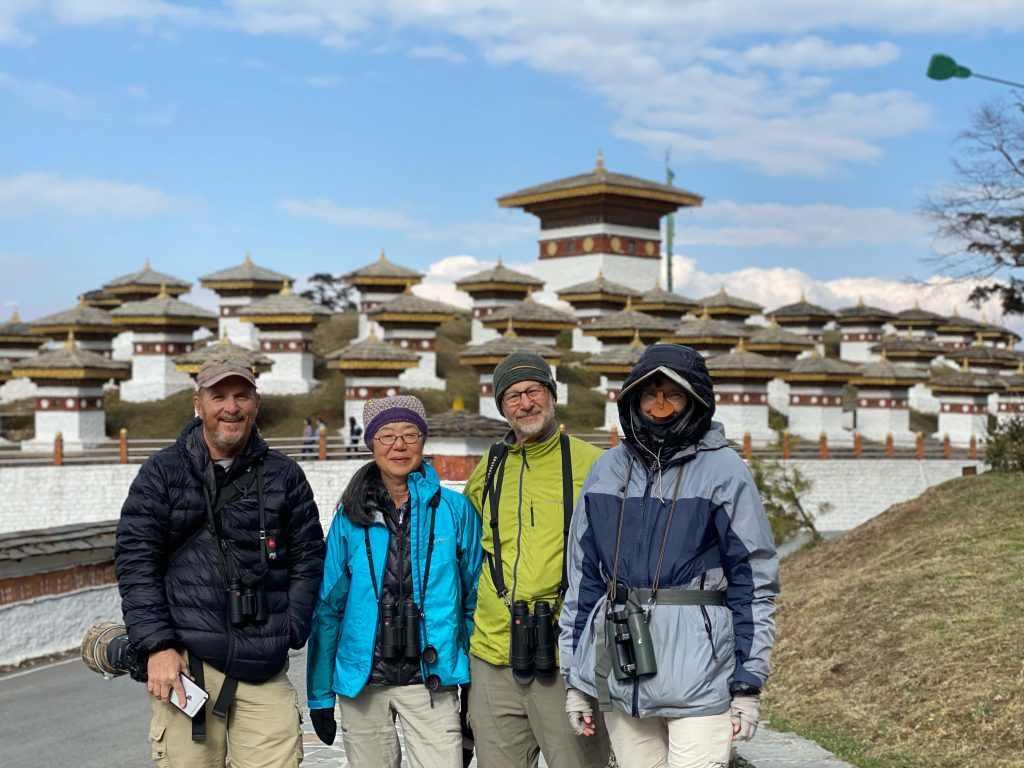
For birdwatching, carry binoculars, comfortable walking shoes, suitable clothing, and patience. Some of the best sightings happen away from busy tourist areas.

Most importantly, remember that Bhutan is a destination where the journey itself is part of the experience.

Why Choose Langur Eco Travels for Bhutan Travel

Exploring Bhutan becomes more rewarding when a trip is designed around the interests of the traveler rather than a simple checklist of attractions.

Langur Eco Travels specializes in Bhutan travel with a strong focus on nature, culture, birdwatching, and meaningful experiences. The company can help travelers understand the differences between Bhutan’s regions and plan journeys that combine important destinations with less explored landscapes.

For bird enthusiasts, the Birds of Bhutan resource is particularly useful for learning about the country’s rich avian environment.

Travelers who want to discuss a customized Bhutan journey can also use the Langur Eco Travels contact page to enquire about suitable travel arrangements.

Frequently Asked Questions

What is the largest city in Bhutan

Thimphu is the largest city and capital of Bhutan. The 2017 census recorded a population of 114,551 for the city, making it considerably larger than the country’s other urban centres.

What is the second largest city in Bhutan

Phuntsholing is the second largest city according to the 2017 population figures, with 27,658 residents. It is an important southern gateway and commercial centre near the Indian border.

Is Paro bigger than Thimphu

No. Paro is considerably smaller than Thimphu by population. However, Paro is extremely important for tourism because Bhutan’s international airport is located there.

Which cities are the largest in Bhutan

The major urban centres include Thimphu, Phuntsholing, Paro, Gelephu, Samdrup Jongkhar, Wangdue Phodrang, Punakha, Jakar, Nganglam, and Samtse based on 2017 census data.

Which city is best for first time visitors to Bhutan

Thimphu and Paro are usually the most convenient choices for first time visitors. Paro provides international air access, while Thimphu offers a broad introduction to Bhutanese culture, government, food, architecture, and everyday life.

Which Bhutanese city is best for birdwatching

There is no single best city for every birdwatcher because Bhutan’s birdlife changes with elevation and habitat. Thimphu, Paro, Punakha, southern Bhutan, and eastern Bhutan can all offer different birdwatching opportunities.

Is Phuntsholing worth visiting

Yes. Phuntsholing is especially useful for travelers entering or leaving Bhutan by road through India. Its subtropical environment and border location also make it an interesting contrast to the Himalayan interior.

Is Gelephu a city in Bhutan

Gelephu is an important urban centre in southern Bhutan and the administrative centre of Sarpang District. It is also one of Bhutan’s recognized road entry points from India.

Which city is the gateway to eastern Bhutan

Samdrup Jongkhar is an important gateway to eastern Bhutan. Its location in southeastern Bhutan gives it strategic importance for access to the eastern regions.

Are Bhutan’s cities large compared with Indian cities

No. Bhutan’s cities are relatively small. Even the capital is modest in size compared with major Indian metropolitan areas. This is one reason Bhutan offers such a different urban travel experience.

How many major cities does Bhutan have

The exact number depends on how cities and towns are classified. Population rankings commonly identify the ten largest urban settlements using 2017 census data, while Bhutan has many additional smaller towns and settlements.

Can I explore Bhutan’s cities and birdwatching destinations on one trip

Yes. Bhutan’s varied elevation and habitats make it possible to combine cultural sightseeing with birdwatching. A thoughtfully planned itinerary can include cities such as Thimphu and Paro while also visiting forests, valleys, rivers, and other natural environments.

The largest cities in Bhutan offer far more than population statistics. Thimphu represents the country’s political and cultural heart, Phuntsholing provides an important southern gateway, Paro combines international access with extraordinary cultural heritage, Gelephu connects southern Bhutan with regional development, and Samdrup Jongkhar opens the way toward the country’s fascinating eastern landscapes.

Smaller towns such as Wangdue Phodrang, Punakha, Jakar, Nganglam, and Samtse add further depth to the Bhutan travel experience. Together, these places demonstrate that Bhutan’s urban identity is closely connected with mountains, forests, rivers, monasteries, agriculture, traditions, and local communities.

For travelers, the real value of exploring Bhutan’s cities lies in understanding what surrounds them. A city can be a gateway to a valley, a monastery, a forest, a birding habitat, or an entire cultural region. That is what makes Bhutan different from conventional urban destinations.

Whether your interest is culture, photography, nature, Himalayan landscapes, or birdwatching, exploring Bhutan through its major cities and surrounding regions can create a richer and more meaningful journey. With careful planning and the right local travel support, a visit can move beyond the standard tourist route and reveal the quieter character that makes Bhutan such a distinctive Himalayan destination.

Best Bhutan Bird Watching Tours to Discover Rare Himalayan Birds and Pristine Forests

Best Bhutan Bird Watching Tours offer an unforgettable way to experience the Kingdom of Bhutan through its extraordinary birdlife, peaceful forests, mountain valleys, and untouched natural landscapes. Bhutan is a remarkable destination for bird lovers because its varied elevations create habitats for an impressive range of Himalayan, subtropical, and high altitude birds. From colourful pheasants and laughingthrushes to hornbills, flycatchers, barbets, eagles, and many forest specialists, a bird watching trip in Bhutan can turn an ordinary holiday into a rewarding journey of discovery. For travellers who enjoy nature, photography, quiet trails, and wildlife, Bhutan bird watching tours provide an opportunity to explore the country at a slower and more meaningful pace.

Why Bhutan Is a Special Destination for Bird Watching

Bhutan is one of the most fascinating birding destinations in the Himalayas because of its extraordinary geographical variation. The country rises from subtropical valleys to high mountain landscapes, creating a series of natural habitats within a relatively compact region.

Dense forests cover large parts of the country. Rivers run through deep valleys. Agricultural areas meet woodland edges, while high altitude environments provide completely different conditions for specialised mountain birds.

This diversity makes Bhutan suitable for both experienced birders and travellers who simply want to enjoy beautiful Himalayan wildlife.

A birding journey here is not only about ticking species from a checklist. It is about waking before sunrise, listening to birds calling from the forest, walking quietly along mountain roads, stopping beside rivers, and watching the landscape change as the elevation increases.

That combination gives Bhutan bird watching its special character.

What Makes Bhutan Bird Watching Tours Different

A typical sightseeing holiday focuses on famous landmarks, monasteries, cultural attractions, and scenic viewpoints.

Bird watching tours follow a different rhythm.

The day may begin before sunrise because early morning is often one of the most productive periods for bird activity. Instead of rushing from one attraction to another, travellers spend time observing their surroundings.

A quiet forest path can become the highlight of the day.

A roadside stop can reveal a colourful bird moving through the branches.

A river valley can produce sightings of species that prefer open water and woodland edges.

This slower approach allows travellers to notice details that are easy to miss during conventional sightseeing.

Bhutan also offers the advantage of combining birding with cultural exploration. A day in the forest can be followed by a visit to a monastery, village, traditional settlement, or local market.

That makes a birding holiday suitable for people travelling together who may have different interests.

Explore the Birds of Bhutan Before Your Journey

Anyone planning a birding holiday can begin by learning about the country’s bird diversity through the Birds of Bhutan resource.

Understanding the types of birds found in Bhutan can make the journey more engaging.

You may begin with a short list of species that you hope to see. However, it is worth keeping expectations flexible because wild birds are unpredictable.

Weather, season, habitat, altitude, food availability, and daily activity all influence what you encounter.

The most rewarding birding experiences often happen when you are not expecting them.

Rare Himalayan Birds to Look For

Bhutan is particularly attractive to bird watchers who want to search for Himalayan species.

Depending on the route, habitat, elevation, and season, birders may have opportunities to look for species such as Himalayan Monal, Blood Pheasant, Kalij Pheasant, Satyr Tragopan, Ward’s Trogon, Great Hornbill, Rufous necked Hornbill, Black necked Crane, Ibisbill, Wallcreeper, Himalayan Cutia, laughingthrushes, minlas, barbets, flycatchers, and many other forest and mountain birds.

Not every species is found in every region.

That is one of the reasons route planning matters.

A good Bhutan bird watching itinerary considers habitat and elevation rather than simply trying to cover as many destinations as possible.

Himalayan Monal and Bhutan Birding

The Himalayan Monal is among the birds that can make a Himalayan bird watching trip particularly memorable.

The male is famous for its striking iridescent plumage, while females have more subdued colouring that helps them blend into their surroundings.

Spotting a monal in its natural mountain habitat requires patience.

Birders may need to scan forest edges, slopes, and suitable high altitude areas carefully.

Even when a sighting does not happen, searching for such species encourages travellers to slow down and observe the landscape.

Hornbills and Forest Bird Watching

Hornbills are another major attraction for bird watchers visiting Bhutan.

Their distinctive shapes, powerful bills, and large size make them easier to recognise than many small forest birds.

Different forest habitats can support different hornbill species.

Seeing a hornbill flying between tall trees can be an exciting moment during a Bhutan wildlife tour.

The surrounding forest is equally important.

Instead of concentrating only on one bird, travellers can watch the canopy for movement and listen for calls from other species.

This creates a much richer forest experience.

Laughingthrushes and Colourful Himalayan Forest Birds

Bhutan is well known among birders for its variety of colourful forest birds.

Laughingthrushes, minlas, yuhinas, barbets, and related species can appear in mixed forest habitats.

Some move quickly through vegetation.

Others travel in groups.

A birding guide can help identify species through their calls, behaviour, plumage, habitat, and movement patterns.

For beginners, this can completely change the way they experience a forest.

What initially appears to be a quiet landscape can suddenly become full of activity.

Bird Watching in Bhutanese Forests

Bhutan’s forests are among the biggest reasons bird watchers travel to the country.

The forests vary considerably depending on elevation and region.

Lower areas can have warmer subtropical vegetation, while higher elevations support temperate and alpine habitats.

Each transition creates new opportunities.

Birders should pay attention to forest edges, clearings, streams, fruiting trees, flowering plants, bamboo areas, and mixed vegetation.

These places can attract different groups of birds.

The forest itself becomes a living map of bird behaviour.

Best Places for Bird Watching in Bhutan

Bhutan has several important birding regions and protected landscapes.

The best route depends on the species a traveller wants to search for, the season of travel, available time, and preferred level of trekking.

Some travellers may prefer comfortable birding along roads and gentle trails.

Others may enjoy longer walks and remote habitats.

A carefully designed Bhutan birding tour can combine several environments to create a more varied experience.

Phobjikha Valley and Black Necked Cranes

Phobjikha Valley is one of Bhutan’s best known wildlife destinations because of the seasonal arrival of Black necked Cranes.

These elegant birds migrate to the valley during the colder months.

Their presence has made the region especially important for nature lovers and bird watchers.

The valley itself is beautiful, with open landscapes surrounded by mountains.

Birding here can feel very different from forest birding.

Instead of searching through dense vegetation, observers can scan open areas and wetlands.

The landscape provides a peaceful setting for watching cranes and other birds.

Black Necked Crane Watching

Black necked Crane watching requires patience and respect for the birds.

Migratory birds depend on suitable habitats for feeding and resting.

Visitors should maintain appropriate distances and avoid unnecessary disturbance.

A responsible bird watching approach focuses on observation rather than getting as close as possible.

A good photograph is valuable, but protecting the bird and its habitat is more important.

This principle should guide every wildlife encounter in Bhutan.

Bhutan Bird Photography Tours

Bhutan is also an appealing destination for bird photographers.

The country offers dramatic backgrounds, forest environments, mountain landscapes, and colourful bird species.

However, wildlife photography in the Himalayas can be challenging.

Birds may remain hidden.

Light can change quickly.

Dense vegetation can make focusing difficult.

Some species move rapidly through branches.

Patience is therefore more important than expensive equipment.

A telephoto lens, spare batteries, sufficient memory cards, comfortable clothing, and protection for equipment can be useful.

Photographers should also avoid disturbing birds for the sake of a photograph.

Birding Tours for Beginners

You do not need to be an expert birder to enjoy Bhutan.

Beginners can learn a great deal during a guided trip.

A guide can explain bird calls, behaviour, habitats, seasonal movements, and identification features.

Even common species become more interesting when you understand what you are seeing.

For a first bird watching holiday, it is better to focus on learning and enjoying the environment rather than chasing a huge species list.

The experience becomes more relaxed and rewarding.

Birding Tours for Experienced Birders

Experienced birders may prefer specialised itineraries based around particular species or habitats.

They may want to spend more time in specific forest zones or visit different elevations during the same journey.

A customised itinerary can provide more time for early morning birding and fewer unnecessary transfers.

Experienced birders can also benefit from discussing target species with their tour operator before arrival.

This helps create a route based on realistic expectations.

Best Time for Bird Watching in Bhutan

The best time for bird watching depends on what you want to see.

Different seasons offer different conditions.

Spring can be attractive because forests become active with birds and vegetation.

Autumn can offer clearer mountain views and comfortable travel conditions in many areas.

Winter can be particularly important for migratory species such as Black necked Cranes in suitable valleys.

Summer brings rain to many parts of Bhutan, but wet conditions also support lush vegetation and active ecosystems.

There is no single perfect season for every bird.

The ideal time depends on your target species and preferred habitats.

Spring Bird Watching in Bhutan

Spring can be an exciting period for bird lovers.

Bird activity can increase as forests become greener and natural food resources become available.

Migratory movements can also add variety.

The combination of pleasant landscapes and active bird habitats makes spring an attractive season for nature travel.

However, travellers should still consider local weather and road conditions when planning a detailed itinerary.

Autumn Bird Watching in Bhutan

Autumn is popular with travellers because of generally favourable travel conditions in many areas.

Mountain views can be spectacular, and forest birding remains rewarding.

For photographers, clearer conditions can also provide opportunities to combine bird photography with landscape photography.

The season can be busy for tourism, so early planning is useful.

Winter Bird Watching and Migratory Species

Winter offers a different birding experience.

High elevation areas can become extremely cold, but lower valleys may remain suitable for birding.

Phobjikha Valley becomes particularly interesting for those interested in Black necked Cranes.

Birders should prepare for cold mornings and changing temperatures.

Warm clothing, suitable footwear, and patience are important.

Summer Bird Watching in Bhutan

Summer brings more moisture and rainfall to many regions.

For some travellers, wet weather can make long walks less convenient.

However, forests can look exceptionally green and vibrant.

Birding remains possible when itineraries are planned around local weather conditions.

A flexible schedule is helpful during the rainy season.

How Long Should a Bhutan Birding Tour Be

The ideal duration depends on your interests.

A short trip can introduce travellers to Bhutanese birding and selected habitats.

A longer itinerary provides more opportunities to explore different elevations and ecosystems.

For serious birders, additional days can increase the chance of finding specialised species because there is more time for repeated searches.

Birding is naturally unpredictable.

Giving yourself more time can make the experience less stressful.

Why Early Morning Birding Matters

Early morning is often one of the most productive periods for bird watching.

Birds are active as they search for food and establish territories.

Temperatures are usually cooler.

The forest can also be quieter.

This is why birding tours frequently begin early.

It may feel difficult to leave a comfortable bed before sunrise while on holiday, but the experience can be worth it.

The first calls of the morning can become one of the most memorable sounds of the trip.

What to Pack for Bhutan Bird Watching Tours

Packing correctly can make a major difference.

Useful items include comfortable walking shoes, layered clothing, rain protection, binoculars, a camera, spare batteries, memory cards, sunscreen, personal medicines, a reusable water bottle, and a small backpack.

Binoculars are particularly important.

Many Himalayan birds remain high in trees or at a distance.

A good pair of binoculars can make identification much easier.

Neutral coloured clothing can also be practical because it is less visually distracting in natural environments.

Why Binoculars Are Essential for Birding

Birds are often smaller and farther away than expected.

Binoculars allow observers to see details without approaching wildlife.

They can help identify colours, patterns, wing shapes, bills, and behaviour.

For beginners, learning how to hold and focus binoculars before the trip can save time during actual sightings.

A bird may remain visible for only a few seconds.

Being prepared helps.

Responsible Bird Watching in Bhutan

Responsible tourism should be central to every bird watching trip.

Birds should never be chased.

Their nests should not be disturbed.

Playback of bird calls should be used cautiously or avoided where it may cause unnecessary stress.

Visitors should remain on appropriate paths and follow local guidance.

Plastic waste should be avoided.

Quiet observation is one of the simplest ways to reduce disturbance.

The purpose of wildlife tourism should be to appreciate nature while helping protect it.

Combining Bird Watching With Bhutan Culture

One of the best things about Bhutan is that wildlife and culture can be experienced during the same journey.

A morning forest walk can be followed by a visit to a monastery.

A birding session can be combined with a village visit.

A mountain drive can include stops at viewpoints and cultural landmarks.

This combination makes Bhutan different from destinations where wildlife tourism is completely separated from everyday culture.

Travellers can experience the country as a whole.

Why Guided Bhutan Birding Tours Are Valuable

A knowledgeable guide can make a major difference during a birding journey.

Guides understand local habitats and can help identify calls and movement.

They also know where to look and when to stop.

Instead of walking continuously, a guide may pause at a productive location and wait.

This patience can produce better opportunities.

Guides can also help travellers understand local customs and responsible wildlife behaviour.

For visitors unfamiliar with Himalayan forests, this local knowledge can be especially valuable.

Planning a Personalised Bhutan Bird Watching Tour

Every bird watcher has different priorities.

One person may be interested in pheasants.

Another may want hornbills.

A photographer may prioritise colourful forest species.

Someone visiting in winter may focus on Black necked Cranes.

A personalised itinerary can take these preferences into account.

It can also consider walking ability, accommodation preferences, travel duration, and desired balance between birding and sightseeing.

Langur Eco Travels focuses on Bhutan travel experiences and birding journeys designed around the natural and cultural character of the country.

You can explore the Langur Eco Travels Bhutan birding travel service to learn more about planning a nature focused journey.

For specific travel questions or itinerary discussions, travellers can use the Langur Eco Travels contact page.

How Bhutan Bird Watching Supports Nature Awareness

Bird watching encourages travellers to understand ecosystems.

A bird is not simply an isolated attraction.

Its presence is connected to forests, insects, fruiting plants, rivers, climate, nesting locations, and food chains.

When travellers begin noticing these relationships, they gain a deeper appreciation of conservation.

A forest becomes more than scenery.

A wetland becomes more than an open field.

A mountain valley becomes part of a larger ecological system.

This is one of the most meaningful benefits of birding tourism.

The Experience Beyond a Bird Checklist

A species checklist can be useful, especially for experienced birders.

But the best Bhutan bird watching tours offer much more than numbers.

The sound of a laughingthrush in the forest.

A distant raptor circling above a valley.

The sudden movement of a pheasant across a trail.

A hornbill flying between trees.

A group of cranes feeding peacefully in a winter valley.

These moments create memories that cannot be reduced to a checklist.

The journey itself becomes part of the experience.

Frequently Asked Questions

What are the best Bhutan bird watching tours for beginners

Beginners should consider a guided itinerary that combines accessible forest trails, varied habitats, comfortable travel, and enough time for learning basic bird identification.

Is Bhutan good for bird watching

Yes. Bhutan offers a remarkable range of habitats from subtropical forests to high mountain environments, making it an excellent destination for Himalayan bird watching.

What birds can I see in Bhutan

Depending on the region and season, travellers may encounter pheasants, hornbills, laughingthrushes, barbets, flycatchers, raptors, cranes, minlas, yuhinas, and many other Himalayan and subtropical species.

What is the best month for bird watching in Bhutan

There is no single best month for every species. Spring and autumn are popular for general birding, while winter is especially interesting for migratory Black necked Cranes in suitable habitats.

Can beginners join Bhutan birding tours

Yes. Bhutan birding tours can be enjoyed by beginners as well as experienced bird watchers. A knowledgeable guide can explain species, calls, habitats, and birding techniques.

Can I combine bird watching with sightseeing in Bhutan

Yes. Bhutan is ideal for combining wildlife observation with monasteries, cultural sites, mountain scenery, villages, traditional architecture, and local experiences.

Is Bhutan suitable for bird photography

Yes. Bhutan offers excellent opportunities for bird photography, although dense forests, changing light, distance, and fast moving birds require patience.

Do I need binoculars for Bhutan bird watching

Binoculars are strongly recommended because many birds remain high in trees or at a distance.

How many days are needed for a Bhutan birding tour

The required duration depends on your target species and preferred regions. Longer trips generally provide more opportunities to explore different habitats and elevations.

Is Bhutan bird watching suitable for families

Families who enjoy nature can have a rewarding bird watching experience, especially when itineraries include comfortable travel and manageable walks.

What should I wear for bird watching in Bhutan

Layered clothing, comfortable walking shoes, rain protection, and clothing suitable for changing temperatures are practical choices.

How can I make my Bhutan birding trip more responsible

Maintain a safe distance from wildlife, avoid disturbing nests, follow local instructions, keep noise low, avoid littering, and respect natural habitats.

Can I plan a customised Bhutan bird watching tour

Yes. A customised itinerary can be designed around preferred bird species, seasons, habitats, travel duration, photography interests, and the desired balance between wildlife and cultural sightseeing.

The best Bhutan bird watching tours are not simply journeys designed to find rare birds. They are opportunities to experience Bhutan through forests, rivers, mountains, valleys, wildlife, culture, and quiet moments in nature.

Bhutan offers remarkable habitat diversity, which creates opportunities to search for an exciting range of Himalayan and subtropical birds. From colourful pheasants and hornbills to forest specialists and winter visitors such as Black necked Cranes, every region can bring a different experience.

The real appeal lies in the way birding changes how you travel.

You begin listening more carefully.

You notice movement in the trees.

You watch the changing light.

You become aware of altitude and habitat.

You appreciate forests not simply for their beauty but for the life they support.

Whether you are an experienced birder with a detailed species list or a first time traveller who simply loves wildlife, Bhutan provides an exceptional setting for discovering Himalayan nature.

With thoughtful planning, responsible observation, suitable timing, and knowledgeable local guidance, a bird watching journey can become one of the most rewarding ways to explore Bhutan.

Why Royal Manas National Park Tours Are Perfect for Exploring Bhutan Wild Side

Royal Manas National Park tours are an ideal choice for travelers who want to discover Bhutan beyond its famous monasteries, mountain valleys, traditional villages, and cultural landmarks. Located in the southern part of Bhutan, Royal Manas National Park introduces visitors to a warmer and greener side of the country where forests, rivers, grasslands, birds, and wildlife create a completely different travel experience. For anyone planning a Bhutan wildlife tour, birdwatching holiday, nature photography trip, or adventure journey, Royal Manas offers an opportunity to experience Bhutan at a slower and more natural pace.

Bhutan is often imagined through images of snow covered mountains and peaceful Buddhist monasteries. Those attractions are certainly an important part of the country, but they represent only one part of its natural and cultural character. Southern Bhutan has a subtropical environment with dense forests and diverse habitats. A journey through Royal Manas can therefore add a fascinating wildlife dimension to a traditional Bhutan itinerary.

Langur Eco Travels is a Bhutan tour and travel company that focuses on nature, wildlife, birdwatching, cultural exploration, and carefully planned Bhutan journeys. Travelers interested in discovering the natural side of Bhutan can learn more about Langur Eco Travels.

What Makes Royal Manas National Park Special

Royal Manas National Park is one of Bhutan’s most significant protected natural areas. Its location in southern Bhutan gives it an environment that differs considerably from the high altitude landscapes found in many other parts of the country.

The park includes forests, river systems, grasslands, and subtropical habitats. These different environments support a wide variety of plant and animal life.

For travelers, the result is an experience that feels more like a genuine nature expedition than a conventional sightseeing tour.

There are no guarantees about what you will see.

You may encounter birds moving through the canopy.

You may notice animal tracks.

You may spot wildlife near forest edges.

You may spend time beside a river.

Or you may simply enjoy the peaceful atmosphere of the forest.

This unpredictability is exactly what makes a wildlife journey exciting.

Why Royal Manas Is Perfect for Exploring Bhutan Wild Side

A Royal Manas National Park tour offers something that many conventional Bhutan itineraries do not.

It gives travelers time to observe nature.

Instead of moving quickly between monuments, travelers can spend a morning listening to birds, exploring forest environments, observing wildlife habitats, and appreciating the changing landscape.

Royal Manas is particularly appealing to travelers interested in wildlife photography, birdwatching, nature travel, forest exploration, and responsible tourism.

It can also be combined with Bhutan cultural tours, allowing visitors to experience both sides of the country.

One part of the journey can focus on monasteries, architecture, and traditional life.

Another can focus on forests, rivers, birds, and wildlife.

That contrast creates a much more varied Bhutan holiday.

A Different Side of Bhutan

Most first time visitors to Bhutan are naturally attracted to places such as Paro, Thimphu, Punakha, and other well known cultural destinations.

These places provide an important introduction to Bhutan.

However, travelers who venture toward Royal Manas discover that Bhutan has a very different personality in the south.

The climate becomes warmer.

Vegetation becomes denser.

Forests become more prominent.

Rivers become an important part of the landscape.

Wildlife habitats replace many of the built attractions found in urban areas.

The journey itself becomes an important part of the experience.

This is one of the strongest reasons to include Royal Manas in a longer Bhutan itinerary.

Royal Manas for Wildlife Lovers

Wildlife is naturally one of the main reasons travelers visit Royal Manas National Park.

The park provides habitat for numerous species of mammals, birds, reptiles, amphibians, insects, and plants.

Depending on the season, location, weather, and natural conditions, visitors may have opportunities to observe different wildlife species.

Potential sightings can include elephants, gaur, deer, wild boar, golden langurs, and other forest animals.

However, travelers should understand an important part of responsible wildlife tourism.

Wild animals are not predictable.

There is no guarantee that a particular animal will appear at a specific time or location.

One morning may produce several exciting sightings.

Another may be quieter.

That does not make the second experience less valuable.

A forest is a living environment rather than a controlled attraction.

The opportunity to spend time within that environment is itself the reward.

Birdwatching in Royal Manas National Park

Bhutan is a fascinating country for birdwatchers because its geography creates a remarkable range of habitats.

Royal Manas is particularly attractive because its subtropical environment supports birdlife that can differ from species found in the higher mountain regions.

Early mornings are often especially rewarding for birdwatchers.

The forest becomes active as birds begin calling and moving through the trees.

Some species may be easy to spot.

Others may remain hidden.

Learning to identify birds by their calls can become an important part of the experience.

Binoculars are highly useful because many birds stay high in trees or at a distance.

Instead of approaching too closely, travelers can observe from a respectful position.

For serious birdwatchers, Royal Manas can become an important part of a wider Bhutan birdwatching itinerary.

The Fascinating Golden Langur

Golden langurs are among the wildlife species associated with the forests of the Bhutan and northeastern India region.

Their distinctive appearance makes them particularly interesting to wildlife enthusiasts and photographers.

Seeing these primates moving naturally through the forest can be a memorable experience.

However, the value of protecting species such as golden langurs extends beyond tourism.

Their survival depends on healthy forest habitats.

A protected ecosystem provides food, shelter, breeding areas, and movement corridors for many different species.

Visitors therefore gain more than a chance to see wildlife.

They also gain a better understanding of why conservation is important.

The Landscape of Southern Bhutan

The scenery around Royal Manas is another major attraction.

Southern Bhutan has a distinctly subtropical character.

Dense vegetation creates a feeling of being surrounded by nature.

Rivers provide dramatic landscape features.

Forest roads offer changing views.

Grasslands and open spaces create habitat diversity.

The result is a landscape that changes throughout the journey.

For photographers, this variety creates countless subjects.

Wildlife is only one possibility.

You can photograph rivers, forest textures, plants, birds, insects, changing skies, distant hills, and local landscapes.

A successful photography trip does not have to depend on seeing a rare animal.

The environment itself provides an abundance of subjects.

Why Slow Travel Works in Royal Manas

A Royal Manas trip naturally encourages slow travel.

You may spend several minutes waiting quietly for a bird.

You may stop because your guide has noticed movement in the forest.

You may sit beside a river and simply enjoy the surroundings.

You may walk slowly through a forest while listening to different bird calls.

This pace can be very different from conventional tourism.

Instead of asking how many attractions you can visit in one day, you begin asking how much you can notice.

That change in perspective can make the journey much more meaningful.

Royal Manas is a destination where slowing down is not a disadvantage.

It is part of the experience.

Best Time to Visit Royal Manas National Park

The best time for a Royal Manas tour depends on your interests.

Cooler and relatively dry periods can be comfortable for outdoor exploration.

Winter can be particularly appealing because temperatures in southern Bhutan are generally milder than in the higher mountain areas.

Spring can provide fresh greenery and rewarding birdwatching opportunities.

The monsoon period can produce lush landscapes but may also bring heavy rainfall and more challenging travel conditions.

Travelers should therefore choose their dates according to the type of experience they want.

Birdwatchers may have different seasonal priorities from photographers.

Families may prefer comfortable weather.

Adventure travelers may be more flexible.

Discussing your interests with an experienced Bhutan tour company can help create a more suitable itinerary.

Royal Manas During Winter

Winter can be a comfortable period for exploring the southern part of Bhutan.

While high altitude destinations may be cold, southern Bhutan can offer a much milder environment.

This makes it possible to combine Royal Manas with mountain destinations without experiencing the same weather throughout the trip.

Travelers should still pack layers.

Temperature differences can be significant when moving between elevations.

A jacket that is useful in the mountains may not be necessary throughout the day in the southern lowlands.

Royal Manas During Spring

Spring is a wonderful period for nature enthusiasts.

Vegetation begins to look fresh and vibrant.

Bird activity can make early mornings particularly enjoyable.

The weather can also be suitable for outdoor exploration.

Photographers may appreciate the combination of new greenery, wildlife activity, and changing light.

For travelers who want to combine birdwatching and general nature sightseeing, spring can be an attractive choice.

Royal Manas During Monsoon

The monsoon season brings a dramatic transformation to the landscape.

Forests become exceptionally green.

Rivers can become more powerful.

Clouds and mist may create atmospheric scenery.

However, heavy rain can also affect roads and outdoor activities.

Travelers visiting during this period should remain flexible.

It is important to understand that mountain and forest travel can take longer during wet conditions.

A responsible itinerary should allow additional time and avoid unnecessary risks.

Combining Royal Manas With a Bhutan Cultural Tour

One of the best ways to experience Bhutan is to combine wildlife and culture.

Imagine beginning your journey among traditional architecture and monasteries.

You then travel through mountain valleys and eventually reach the warmer forests of southern Bhutan.

The contrast can be remarkable.

You experience Bhutanese traditions.

You see dramatic landscapes.

You explore forests.

You listen to birds.

You look for wildlife.

This type of itinerary provides a broader understanding of Bhutan.

It also makes the journey more interesting for groups with different travel preferences.

Royal Manas for Nature Photography

Nature photography is another reason to visit Royal Manas.

The region provides opportunities to photograph wildlife, birds, rivers, forests, plants, insects, and landscapes.

Early morning photography can be particularly rewarding.

The light is often softer, and wildlife activity may be higher.

A telephoto lens can be useful for wildlife photography because it allows you to maintain a respectful distance.

The most important rule is to avoid disturbing animals for a photograph.

Do not chase wildlife.

Do not make loud sounds to attract animals.

Do not move closer simply to improve a photograph.

Patience usually produces better results.

The Importance of a Local Wildlife Guide

A knowledgeable guide can make a Royal Manas tour considerably more informative.

A local guide may understand animal tracks, bird calls, forest habitats, seasonal changes, and suitable observation areas.

This knowledge can help travelers notice things they might otherwise miss.

A forest can appear quiet to an inexperienced visitor.

An experienced guide may immediately recognize that a particular bird is nearby.

They may notice movement in the trees.

They may identify tracks that indicate recent wildlife activity.

This local knowledge adds depth to the experience.

Responsible Wildlife Tourism in Bhutan

Responsible travel should be a central part of every Royal Manas visit.

Visitors should never feed wild animals.

Do not attempt to touch or approach wildlife.

Keep noise levels low.

Avoid leaving plastic or other waste behind.

Follow designated routes.

Respect instructions from guides and local authorities.

Do not collect plants, feathers, rocks, or other natural objects.

Respect nearby communities and local traditions.

A protected area can only remain healthy when visitors understand that they are guests within the ecosystem.

Royal Manas for Families

Families can find Royal Manas both educational and entertaining.

Children can learn about wildlife in a real natural environment.

They can discover how forests support different species.

They can learn why rivers and habitats are important.

They can develop an appreciation for conservation.

However, family itineraries should be realistic.

Very young children may not enjoy long periods of quiet wildlife observation.

Shorter activities combined with rest periods can work better.

The objective should be to create curiosity rather than exhaustion.

Royal Manas for Couples

Couples looking for an alternative to conventional sightseeing may find Royal Manas appealing.

The peaceful environment creates opportunities to spend time together away from busy tourist areas.

A quiet forest drive can become memorable.

An early morning birdwatching session can become a shared experience.

A riverside stop can provide time to relax.

Royal Manas can also be combined with cultural sightseeing and scenic destinations to create a balanced Bhutan holiday.

What to Pack for Royal Manas National Park

Packing should be adjusted according to the season.

Lightweight clothing is useful during warmer periods.

A light jacket can be helpful during cooler mornings.

Rain protection is important during wetter months.

Comfortable walking shoes are recommended.

Binoculars are useful for birdwatching.

A camera is valuable for photography enthusiasts.

Insect protection may be useful in forest environments.

Sunscreen and personal medicines should also be included.

Travelers visiting both southern and high altitude Bhutan should pack layers because temperatures can change considerably during the journey.

Why Binoculars Are Important

Binoculars allow travelers to observe wildlife without getting too close.

This is particularly useful for birdwatching.

Many birds remain high in trees or move quickly through dense vegetation.

Trying to approach them can disturb their natural behavior.

Binoculars make it possible to appreciate details while maintaining a safe distance.

Even casual travelers often discover that carrying binoculars changes the way they experience a forest.

Once you begin looking carefully, you may realize how much activity is taking place around you.

How Long Should a Royal Manas Tour Be

The ideal duration depends on your priorities.

A short visit can introduce travelers to the landscape.

A longer stay is more suitable for serious birdwatchers and wildlife photographers.

Additional days provide more opportunities to explore different habitats and observe wildlife at different times.

If wildlife is the main reason for your Bhutan trip, avoid treating Royal Manas as a rushed stop between major destinations.

Give the region enough time.

The slower pace is part of what makes it special.

Royal Manas Compared With Other Bhutan National Parks

Bhutan has several protected areas, each with its own character.

Some are associated with high altitude environments.

Others contain temperate forests and mountain valleys.

Royal Manas stands out because of its southern subtropical environment and biological richness.

Travelers who want to explore another major protected landscape can also learn about Wangchuck Centennial National Park.

Exploring different national parks can help visitors understand how Bhutan’s ecosystems change with altitude, climate, and geography.

Why Wildlife Sightings Are Not the Only Goal

It is easy to measure a wildlife tour by the number of animals seen.

But that is not the best way to understand Royal Manas.

A wildlife journey is also about learning.

You learn how animals depend on forests.

You see how rivers influence ecosystems.

You hear birds communicating.

You notice animal tracks.

You observe how vegetation changes across habitats.

Even a quiet day can provide valuable experiences.

The forest does not need to perform for visitors.

Simply being there is part of the adventure.

How to Plan a Royal Manas National Park Tour

Start by deciding what you want from your trip.

If birdwatching is your priority, tell your tour provider.

If wildlife photography is important, allow enough time for patient observation.

If you want a general nature experience, combine forest activities with scenic stops.

If you want culture as well, include monasteries and traditional destinations elsewhere in Bhutan.

Next, select your travel season.

Then decide how many days you can comfortably dedicate to the region.

Avoid creating an itinerary that requires long drives every day.

Wildlife travel can involve early mornings, so rest is important.

A relaxed itinerary is usually more enjoyable than an overcrowded schedule.

For more information about Bhutan travel planning, visit Langur Eco Travels.

Travelers can also discuss their requirements through the Langur Eco Travels Contact Us page.

Common Mistakes to Avoid

One of the biggest mistakes is expecting guaranteed wildlife sightings.

Animals move according to their own behavior.

Another mistake is trying to see too much in too little time.

Rushing through the park can reduce the quality of the experience.

Travelers should also avoid unsuitable clothing and footwear.

Ignoring weather conditions can create unnecessary problems.

Making loud noises around wildlife is another mistake.

Finally, visitors should avoid treating nature as merely a background for photographs.

The ecosystem deserves respect whether or not you capture the perfect image.

Frequently Asked Questions

What is Royal Manas National Park famous for

Royal Manas National Park is known for its diverse wildlife, subtropical forests, rivers, grasslands, and birdlife. It is an important destination for travelers interested in Bhutan nature tours and wildlife experiences.

Why should I visit Royal Manas National Park

Royal Manas offers a different side of Bhutan from its famous cultural and mountain destinations. It is suitable for wildlife observation, birdwatching, photography, forest exploration, and peaceful nature travel.

What animals can be seen in Royal Manas National Park

Depending on the season and natural conditions, visitors may have opportunities to observe elephants, gaur, deer, wild boar, golden langurs, and various other animals. Wildlife sightings are never guaranteed.

Is Royal Manas good for birdwatching

Yes. Its subtropical habitats and varied ecosystems make Royal Manas an interesting destination for birdwatchers. Early morning outings can be particularly rewarding.

What is the best time to visit Royal Manas National Park

Cooler and relatively dry periods can be comfortable for outdoor exploration. Spring can also be attractive for birdwatching. Wet season travel requires greater flexibility because rainfall can affect travel and outdoor activities.

How many days are enough for Royal Manas

A short visit can provide an introduction to the park, while birdwatchers and photographers may prefer several days. More time allows travelers to explore different habitats and observe nature at different times of day.

Can Royal Manas be included in a Bhutan tour package

Yes. Royal Manas can be combined with cultural, scenic, and mountain destinations to create a more varied Bhutan itinerary.

Is Royal Manas suitable for families

Yes. Families can enjoy the park as an educational nature experience. Activities should be selected according to children’s ages, energy levels, and comfort.

What should I carry for a Royal Manas tour

Useful items include comfortable walking shoes, lightweight clothing, rain protection, binoculars, insect protection, sunscreen, personal medicines, and suitable camera equipment.

Can I see golden langurs in Royal Manas

The region provides habitat for golden langurs, but sightings depend on natural conditions. Visitors should maintain a respectful distance and avoid disturbing wildlife.

Is Royal Manas suitable for wildlife photography

Yes. The region offers opportunities to photograph mammals, birds, rivers, forests, plants, and landscapes. Patience and responsible observation are essential.

Do I need a guide for a Royal Manas wildlife tour

A knowledgeable guide can improve the experience by helping travelers understand local habitats, recognize wildlife signs, identify bird calls, and follow responsible observation practices.

How can I plan a Royal Manas National Park tour with Langur Eco Travels

You can learn about Bhutan travel experiences through Langur Eco Travels and discuss your travel requirements through the Contact Us page.

Why Choose Langur Eco Travels for Your Bhutan Wildlife Journey

A wildlife focused Bhutan journey requires thoughtful planning.

Travel dates matter.

Weather matters.

Travel pace matters.

Wildlife interests matter.

The amount of time available matters.

Langur Eco Travels is a Bhutan tour and travel company with a focus on nature, wildlife, birdwatching, and Bhutan travel experiences.

Whether you want to explore Royal Manas, combine wildlife with cultural sightseeing, or create a broader Bhutan nature itinerary, careful planning can make the journey more comfortable and meaningful.

You can explore Langur Eco Travels to learn more about Bhutan travel options.

For questions about planning your trip, use the Contact Us page.

Royal Manas National Park Tours

Royal Manas National Park tours are perfect for travelers who want to experience the wild side of Bhutan in a meaningful and responsible way.

Bhutan is much more than monasteries, mountain passes, traditional architecture, and Himalayan views.

It is also a country of forests, rivers, birds, mammals, subtropical landscapes, and protected ecosystems.

Royal Manas brings this natural side of Bhutan to life.

The experience is not about rushing between attractions.

It is about slowing down.

It is about listening to the forest.

It is about watching birds move through the canopy.

It is about looking for wildlife without disturbing it.

It is about appreciating rivers, grasslands, and changing landscapes.

It is about understanding why protected areas are important.

For birdwatchers, photographers, families, couples, and nature lovers, Royal Manas can become one of the most memorable parts of a Bhutan holiday.

When combined with cultural destinations and other national parks, it can provide a more complete understanding of Bhutan’s remarkable diversity.

Travelers who want a Bhutan itinerary that feels different from a standard sightseeing holiday should consider adding Royal Manas to their plans.

The wild side of Bhutan is quieter, slower, and often wonderfully unpredictable.

That is exactly what makes it worth exploring.

Why Royal Manas National Park Tours Are Perfect for Exploring Bhutan’s Wild Side

Royal Manas National Park tours are an excellent choice for travelers who want to discover a quieter, greener and genuinely wild side of Bhutan. Located in southern Bhutan, Royal Manas National Park is one of the country’s most important protected natural areas, where subtropical forests, rivers, grasslands and Himalayan foothills create a remarkably diverse environment. For visitors who love wildlife, birdwatching, nature photography and slow travel, the park offers a very different experience from Bhutan’s famous monasteries and mountain viewpoints.

Bhutan is often associated with dramatic Himalayan scenery and peaceful cultural landmarks, but its natural wealth extends far beyond the high mountains. In the south, the landscape becomes warmer, greener and more biologically diverse. Royal Manas National Park gives travelers the opportunity to experience this side of the country while traveling through landscapes that feel remote, peaceful and refreshingly untouched.

For travelers planning a nature focused Bhutan holiday, Langur Eco Travels offers Bhutan travel experiences designed around different interests, including wildlife, birdwatching, trekking, culture and photography. A carefully planned itinerary can make Royal Manas more than another destination on a map. It can become an immersive journey into Bhutan’s wild side.

What Makes Royal Manas National Park So Special

Royal Manas National Park is widely regarded as one of Bhutan’s most important wildlife areas. Its location in southern Bhutan gives it a very different character from the high altitude landscapes commonly associated with the country.

Instead of snow covered peaks dominating every view, visitors encounter forests, rivers, valleys, tropical and subtropical vegetation and a much warmer environment.

The park is particularly interesting because of its ecological diversity.

Different habitats support different forms of wildlife and birdlife. The transition between lower and higher environments creates opportunities for nature enthusiasts to observe species that would not necessarily be found together in a single type of landscape.

For travelers, this means that the journey itself becomes part of the attraction.

A road through the forest can reveal changing vegetation. A riverside stop can offer completely different scenery from a woodland trail. A quiet morning may bring birdsong from several directions, while an afternoon drive may provide opportunities to observe signs of wildlife.

Royal Manas rewards curiosity.

Why Royal Manas National Park Tours Are Worth Taking

There are many reasons to include Royal Manas in a Bhutan itinerary, but one of the biggest is the sense of discovery.

Popular cultural destinations can be busy during peak travel periods. Royal Manas offers a different rhythm.

Here, nature sets the pace.

Wild animals do not appear according to a sightseeing schedule. Birds may be visible for only a few seconds. Weather can change the appearance of a forest within minutes. A river that seems quiet from a distance can reveal an entirely different landscape when approached closely.

This unpredictability is part of the adventure.

A good Royal Manas National Park tour should therefore leave room for observation rather than trying to fill every hour with activities.

Travelers who appreciate nature photography, birdwatching and wildlife encounters often benefit from slower itineraries.

Instead of asking how many places can be visited in one day, it is more useful to ask how much time can be spent experiencing each environment properly.

A Wildlife Experience Unlike Typical Tourist Attractions

Royal Manas is particularly appealing to wildlife enthusiasts because it provides a natural environment rather than a controlled setting.

The park is home to diverse wildlife associated with Bhutan’s southern ecosystems. Depending on location, season and natural conditions, travelers may have opportunities to look for species such as Asian elephants, golden langurs, gaur, wild boar and several other mammals.

Wildlife sightings are never guaranteed, and that is an important part of responsible wildlife tourism.

A wild animal is not an attraction that can be expected to appear on demand.

Instead, visitors learn to watch for clues.

Movement in the vegetation.

Animal calls.

Tracks along a trail.

Fresh marks near water.

Birds suddenly becoming alert.

These small details can transform an ordinary journey into an exciting wildlife experience.

An experienced guide can help travelers understand what they are seeing and, equally importantly, what they are not seeing.

That makes the experience educational rather than simply visual.

Royal Manas for Birdwatching Enthusiasts

Bhutan is an increasingly attractive destination for international birdwatchers, and Royal Manas National Park is particularly valuable because of its varied habitats.

The warmer southern environment supports a different bird community from the higher Himalayan areas.

Birdwatching here is best approached patiently.

Early mornings can be particularly rewarding because forests become active with calls and movement. Instead of walking quickly from one point to another, birders can spend time listening and scanning the canopy, understory and open areas.

Some birds may be obvious.

Others may remain hidden.

Sometimes the sound comes first and the bird appears much later.

That is why binoculars, a field guide, suitable clothing and patience can be more useful than simply carrying expensive photography equipment.

For travelers who want to combine Royal Manas with a broader birdwatching journey, Langur Eco Travels specializes in Bhutan travel experiences that can be planned around nature and birding interests.

The Importance of the Manas Landscape

One of the most interesting aspects of Royal Manas is its relationship with the larger Manas landscape.

The southern part of Bhutan forms part of a wider natural region extending toward the Indian border. Wildlife does not recognize political boundaries in the same way humans do, which makes connected habitats extremely important for conservation.

For visitors, this creates an opportunity to understand that national parks are not isolated patches of forest.

They are part of larger ecological systems.

Rivers connect landscapes.

Forests provide movement corridors.

Different elevations create different habitats.

Protected areas help preserve these connections.

A visit to Royal Manas can therefore provide more than photographs. It can help travelers understand why habitat protection matters in a changing world.

Exploring Royal Manas Through Slow Travel

Slow travel is particularly well suited to wildlife destinations.

The idea is simple.

Instead of trying to see everything quickly, travelers spend more time understanding a smaller number of places.

Royal Manas works beautifully with this approach.

A quiet forest drive can become a wildlife observation session.

A riverside stop can become an opportunity for photography.

A village visit can introduce travelers to local life.

An early morning walk can become a birdwatching activity.

This style of travel is often more comfortable because the itinerary does not feel like a race.

It also creates more opportunities for unexpected experiences.

Perhaps the most memorable moment of the day will not be a famous attraction at all. It may be mist floating above a river, a distant bird call or sunlight passing through a forest canopy.

The Best Time to Plan a Royal Manas Tour

The best time to visit depends on what you want to experience.

Different seasons can influence vegetation, weather, road conditions, wildlife activity and photography opportunities.

Spring can bring fresh vegetation and active birdlife.

Autumn can provide attractive conditions for many outdoor activities.

Winter may offer comfortable conditions in the southern region compared with colder high altitude destinations.

The monsoon period can make the landscape intensely green, but heavier rainfall may affect roads and outdoor plans.

Because conditions can vary, travelers should consider their priorities before selecting dates.

A birdwatcher may have different preferences from someone primarily interested in photography.

A family may prefer a different schedule from a dedicated wildlife enthusiast.

A flexible itinerary is usually more useful than assuming every day will unfold exactly as planned.

Royal Manas National Park for Nature Photography

Photography is one of the most rewarding ways to experience the park.

However, the strongest images often require patience.

Wildlife photography can be unpredictable. You may spend considerable time looking through the forest without seeing an animal, only for a brief sighting to happen suddenly.

That means photographers should be prepared before the moment arrives.

Keep your equipment accessible.

Protect cameras from changing weather.

Carry spare batteries.

Use appropriate lenses.

Learn to work with low light.

Most importantly, avoid disturbing wildlife for a photograph.

The goal should be to document natural behavior rather than force an animal into a better position.

Royal Manas also provides excellent opportunities beyond wildlife.

Photographers can focus on:

Forest landscapes

River scenes

Village surroundings

Mountain foothills

Birds

Plants

Natural textures

Sunrise and sunset light

Travel details

These subjects help tell a broader story about the region.

Local Culture Around the Wilderness

A Royal Manas journey should not be limited to wildlife.

The communities surrounding Bhutan’s protected areas are part of the landscape and contribute to the cultural character of the region.

Travelers may encounter villages, agricultural areas, traditional homes and everyday scenes that provide a different perspective on Bhutan.

This is where respectful travel becomes especially important.

A village is not simply another photo location.

People live and work there.

Ask permission before photographing individuals.

Respect private property.

Follow local customs.

Avoid creating unnecessary noise.

Purchase local products responsibly when appropriate.

Simple behavior can make cultural encounters more meaningful.

It also helps ensure that tourism remains respectful of local communities.

Why a Local Guide Can Make a Difference

A forest can look completely different when you know what you are looking for.

A local guide may recognize bird calls that sound like ordinary background noise.

They may notice tracks that most visitors would walk past.

They may know where certain habitats are found.

They can also explain local landscapes, plants, wildlife behavior and cultural practices.

For international travelers, this knowledge can make the experience far more informative.

A guide also provides practical support.

Weather changes.

Road conditions vary.

Walking routes may need adjustment.

Wildlife observation requires patience.

A knowledgeable local team can help adapt the itinerary without turning the trip into a stressful experience.

How to Prepare for a Royal Manas National Park Tour

Good preparation does not require carrying everything you own.

A practical packing list is usually enough.

Consider bringing:

Comfortable walking shoes

Lightweight layered clothing

Rain protection

Sun protection

Reusable water bottle

Personal medication

Small daypack

Binoculars for birdwatching

Camera equipment if required

Extra batteries

Memory cards

Basic personal toiletries

Because Royal Manas is located in a warmer region, clothing choices may differ from what you would pack for a high altitude Bhutan trek.

Comfort matters more than fashion when spending long periods outdoors.

Responsible Wildlife Tourism in Royal Manas

A protected area depends on visitors behaving responsibly.

Responsible travel is not complicated.

Do not feed wild animals.

Do not chase wildlife.

Keep a safe distance.

Avoid loud sounds around animals.

Do not remove plants or natural objects.

Use designated paths where applicable.

Carry waste with you.

Avoid unnecessary plastic waste.

Follow instructions from guides and park authorities.

Photography should never come before animal welfare.

If an animal moves away because visitors are getting too close, the correct response is to give it more space.

The best wildlife experience is one where the animal remains undisturbed.

How Long Should You Spend in Royal Manas

There is no universal answer.

The right duration depends on the overall Bhutan itinerary and your interests.

A traveler with limited time might include Royal Manas as one component of a larger journey.

A serious wildlife enthusiast may want several days for repeated observation opportunities.

Birdwatchers can also benefit from spending additional mornings in suitable habitats because different outings may produce completely different sightings.

This is why itinerary design matters.

A rushed trip can turn a wildlife destination into a long list of driving hours.

A well paced trip gives you time to observe, rest and appreciate the environment.

Combining Royal Manas With Other Bhutan Experiences

Bhutan is small enough to create varied itineraries but diverse enough to make each region feel different.

Royal Manas can be combined with cultural experiences, mountain scenery, trekking and traditional festivals depending on the length of your trip.

This makes it possible to build a Bhutan holiday that balances nature and culture.

You might spend part of the journey exploring monasteries and traditional architecture, then move toward the southern forests for a completely different experience.

Travelers interested in cultural events and trekking can also explore scheduled Bhutan tour experiences while planning a wider itinerary.

The combination can provide a more complete understanding of Bhutan.

Who Should Visit Royal Manas National Park

Royal Manas can appeal to a wide range of travelers.

Wildlife Lovers

Anyone fascinated by animals in natural habitats can find the park rewarding.

Birdwatchers

The varied habitats create excellent opportunities for observing different bird species.

Nature Photographers

Forests, rivers, birds, wildlife and changing light provide a broad range of photographic subjects.

Adventure Travelers

Those who enjoy less conventional destinations may appreciate the sense of exploration.

Families

Families can use the experience as an opportunity to introduce children to wildlife, conservation and responsible tourism.

Couples

Travelers seeking peaceful natural surroundings may enjoy the slower pace of a forest based journey.

Travelers Seeking Something Different

If you have already explored Bhutan’s famous cultural destinations and want to discover another side of the country, Royal Manas can add an entirely different dimension to your trip.

Common Mistakes Travelers Should Avoid

One of the biggest mistakes is expecting guaranteed animal sightings.

Wildlife does not work like a timetable.

Another mistake is trying to cover too many places in a short period.

Southern Bhutan may appear easy to explore on a map, but road journeys can take time.

Ignoring weather is another common problem.

Outdoor plans should always allow some flexibility.

Travelers should also avoid assuming that expensive equipment automatically produces better wildlife photographs.

Patience, timing and observation are often more important.

Finally, do not forget to enjoy the journey.

A forest road is not simply transportation between two points.

It is part of the Royal Manas experience.

Planning Your Royal Manas National Park Tour With Langur Eco Travels

A successful Bhutan wildlife holiday starts with choosing an itinerary that matches your interests.

Langur Eco Travels is a Bhutan tour and travel company offering travel planning for visitors interested in discovering different sides of the country.

You can explore the company and its Bhutan travel services through the Langur Eco Travels website.

If Royal Manas is an important part of your travel plans, it is useful to communicate your priorities before finalizing the itinerary.

Tell your travel planner whether your main interests are wildlife, birdwatching, photography, trekking, culture or a combination of several experiences.

You can also discuss your requirements through the Langur Eco Travels contact page.

A well designed itinerary can account for travel time, preferred activities, seasonal conditions and the amount of time you want to spend in nature.

Frequently Asked Questions

What is Royal Manas National Park famous for

Royal Manas National Park is known for its rich biodiversity, subtropical forests, rivers and diverse wildlife. It is one of Bhutan’s important protected natural areas and is particularly interesting for wildlife and birdwatching enthusiasts.

Is Royal Manas National Park good for wildlife watching

Yes. The park offers habitat for a wide range of wildlife. However, sightings depend on natural conditions, animal behavior, season and location. Visitors should approach wildlife watching with patience rather than expecting guaranteed encounters.

Can I go birdwatching in Royal Manas National Park

Yes. Royal Manas is an attractive destination for birdwatchers because of its varied habitats and southern location. Early morning outings with binoculars and a knowledgeable guide can make the experience particularly rewarding.

What animals can be seen in Royal Manas National Park

The park provides habitat for numerous mammals and other wildlife. Depending on natural conditions, visitors may have opportunities to look for species such as elephants, golden langurs, gaur and wild boar, among others.

What is the best time to visit Royal Manas National Park

The ideal season depends on your travel goals. Spring and autumn can be attractive for outdoor exploration, while winter can provide comfortable conditions in the southern region. Seasonal weather should be considered before planning a trip.

How many days are needed for a Royal Manas tour

The duration depends on your interests and the rest of your Bhutan itinerary. A short visit can provide an introduction, while several days allow more opportunities for wildlife observation, birdwatching and photography.

Is Royal Manas suitable for families

It can be suitable for families who enjoy nature and outdoor activities, particularly when the itinerary is planned around comfortable travel times and age appropriate activities.

Is a guide recommended for Royal Manas

A local guide can make a major difference, particularly for birdwatching and wildlife observation. Guides can help identify animal signs, understand habitats and choose appropriate observation locations.

Can photographers visit Royal Manas National Park

Absolutely. Wildlife, birds, forests, rivers, villages and changing landscapes provide many photographic subjects. Photographers should prioritize ethical wildlife practices and avoid disturbing animals.

Can Royal Manas be included in a wider Bhutan tour

Yes. Depending on the itinerary, Royal Manas can be combined with cultural destinations, trekking experiences, festivals and other natural attractions. The ideal route depends on available travel time and personal interests.

Royal Manas National Park Tours

Royal Manas National Park tours are ideal for travelers who want to discover a side of Bhutan that feels quieter, greener and more connected to the natural world.

The park is not about rushing from one attraction to another.

It is about listening to a forest.

Watching a river move through the landscape.

Searching the trees for birds.

Waiting patiently for signs of wildlife.

Meeting communities along the journey.

And appreciating how Bhutan protects the relationship between people and nature.

For travelers interested in wildlife tourism, birdwatching, photography and responsible exploration, Royal Manas can become one of the most memorable parts of a Bhutan holiday.

With thoughtful planning, realistic expectations and respect for the environment, the journey becomes more than a visit to a national park. It becomes an opportunity to experience Bhutan from a different perspective.

Langur Eco Travels can help travelers create a Bhutan itinerary that brings together wilderness, culture and exploration according to their interests. For more information, visit Langur Eco Travels or discuss your requirements through the contact page.

Informational Disclaimer: Travel routes, weather, park access, wildlife activity and local requirements may change. Travelers should confirm current travel arrangements and follow applicable local regulations, safety instructions and environmental guidelines before visiting Royal Manas National Park.

Why Jigme Singye Wangchuck National Park Tours Are Perfect for Exploring Bhutan’s Untamed Wilderness

Jigme Singye Wangchuck National Park tours offer an unforgettable way to experience Bhutan’s untamed wilderness away from crowded tourist routes. Formerly known as Black Mountain National Park, this vast protected landscape sits in the heart of Bhutan and brings together dense forests, mountain valleys, rivers, wildlife habitats and peaceful rural surroundings. For travelers who want more than sightseeing, a journey through this part of Bhutan can feel like stepping into a completely different world.

Bhutan is famous for its monasteries, mountain scenery and traditional culture, but its natural environment is equally remarkable. Jigme Singye Wangchuck National Park gives travelers an opportunity to experience that side of the country at a slower and more meaningful pace. The park is especially appealing to people interested in wildlife, birdwatching, nature photography, hiking and quiet Himalayan landscapes.

For travelers planning a nature focused Bhutan holiday, Langur Eco Travels provides travel planning through its Bhutan tour and travel services. The goal is not simply to move from one attraction to another, but to make the journey itself part of the experience.

What Makes Jigme Singye Wangchuck National Park Special

Jigme Singye Wangchuck National Park is one of Bhutan’s important protected areas and is known for its remarkable ecological diversity. Its landscape includes subtropical forests at lower elevations, temperate forests higher up and Himalayan environments toward the upper reaches.

This changing elevation creates different habitats within one protected region. As a result, visitors can encounter a wide variety of plant life, birds and animals while traveling through different parts of the park.

The park is also important because it connects different natural environments across central Bhutan. Instead of being defined by one dramatic viewpoint, its appeal comes from the richness of the entire landscape.

A journey here may include:

Dense Himalayan forests

Mountain streams and rivers

Remote valleys

Traditional villages

Bird rich woodland

Wildlife habitats

Mountain roads

Peaceful hiking areas

Scenic countryside

This makes the park particularly suitable for travelers who enjoy exploration rather than simply checking famous attractions off a list.

Why Take a Jigme Singye Wangchuck National Park Tour

A national park visit can be planned independently, but traveling with a knowledgeable local tour company can make a major difference when exploring remote Himalayan environments.

The reason is simple. Wildlife and nature experiences do not follow a fixed timetable.

A beautiful forest may look completely different early in the morning compared with midday. Certain birds are easier to find during particular periods of the day. Weather can also affect road conditions, visibility and hiking plans.

A well planned tour allows travelers to spend more time observing their surroundings instead of worrying about every logistical detail.

For international visitors, this can be especially valuable because the landscape, roads, weather and distances may be unfamiliar.

Langur Eco Travels can help travelers organize Bhutan travel experiences through its main travel information and tour service, allowing the itinerary to be designed around interests such as birdwatching, wildlife, photography, trekking or broader Himalayan exploration.

The Wildlife Experience in Jigme Singye Wangchuck National Park

One of the biggest reasons travelers choose Jigme Singye Wangchuck National Park is its wildlife.

The park provides habitat for a range of Himalayan and subtropical species. Depending on location, season and luck, nature enthusiasts may have opportunities to look for animals such as red pandas, Himalayan black bears, golden langurs and other forest species.

However, wildlife tourism in a natural habitat should always be approached with realistic expectations.

Seeing a wild animal is never guaranteed.

That uncertainty is actually part of the attraction.

Instead of visiting an enclosure where an animal is expected to appear at a particular time, travelers enter an ecosystem where every sighting is a privilege.

A rustling branch, distant call or movement between trees can suddenly turn an ordinary forest walk into a memorable moment.

This is one reason experienced nature guides are valuable. They can help visitors understand animal behavior, identify tracks and sounds, and recognize habitats that might otherwise appear completely ordinary.

Birdwatching in the Park

Bhutan is an exceptional destination for birdwatchers, and Jigme Singye Wangchuck National Park deserves attention from anyone interested in Himalayan birds.

The combination of forests, elevation changes and varied habitats supports a rich birdlife. Forest birds can be particularly rewarding for patient observers because many species are heard before they are seen.

Birdwatching here is therefore not simply about carrying binoculars and looking into the trees.

It is about slowing down.

A good birding experience may involve standing quietly beside a forest trail, listening to calls and watching the canopy for movement. Early mornings are often especially enjoyable because forests become active with bird calls.

Photography enthusiasts should also prepare for challenging conditions. Dense vegetation, low light and fast moving birds can make photography difficult. A longer lens, extra batteries, weather protection and patience are more useful than expecting every sighting to produce a perfect photograph.

Travelers interested in specialized Bhutan birding experiences can explore the Bhutan birding tour options offered by Langur Eco Travels.

A Landscape That Changes With Elevation

One of the most fascinating aspects of Jigme Singye Wangchuck National Park is the way the environment changes as elevation increases.

At lower elevations, travelers may encounter warmer forest environments with different vegetation from the high Himalayan landscape.

As roads and trails climb, temperatures change, vegetation becomes different and mountain views become increasingly prominent.

This creates a journey where the scenery keeps evolving.

One moment you may be traveling beside a river through lush greenery. Later, the road may enter cooler mountain forests with mist moving between the trees.

For photographers, this variation provides countless opportunities.

For ordinary travelers, it simply makes the journey interesting.

There is no need to rush from one viewpoint to another because the landscape itself becomes the attraction.

The Best Way to Explore the Park by Road

For many visitors, the most practical way to explore remote parts of Bhutan is by road.

A private cab or tour vehicle provides flexibility that can be difficult to achieve with a tightly scheduled group itinerary.

You can stop for photographs when the landscape changes.

You can spend longer at a quiet viewpoint.

You can adjust the pace when weather conditions change.

You can take time to enjoy small villages and roadside scenery.

This is particularly important in a Himalayan environment where travel distances can take longer than they appear on a map.

The journey should therefore be planned around realistic driving times rather than simply counting kilometers.

A comfortable vehicle, experienced driver and flexible itinerary can make a significant difference.

When Is the Best Time to Visit

There is no single perfect month for everyone because the ideal time depends on what you want to experience.

Spring can be attractive for travelers interested in flowering plants, fresh greenery and bird activity.

Autumn is often appealing because mountain landscapes can be clearer after the monsoon period.

Winter can provide a quieter experience in suitable lower elevation areas, although colder temperatures and changing mountain conditions need to be considered.

The monsoon period brings lush greenery but can also create more challenging road and weather conditions.

If your primary purpose is birdwatching or wildlife observation, discuss the timing with your tour planner before finalizing the itinerary. Seasonal conditions can influence which areas are most practical to explore.

Jigme Singye Wangchuck National Park for Nature Photography

A national park tour can be especially rewarding for photographers because the landscape provides more than conventional tourist photographs.

You can photograph:

Forest roads

Mountain valleys

River landscapes

Traditional homes

Local villages

Birdlife

Forest details

Changing clouds

Himalayan mountains

Sunrise and sunset landscapes

Wildlife photography requires a different approach.

Rather than expecting animals to pose, photographers need to be ready for brief opportunities. Keeping equipment accessible and learning to work with changing light can make a major difference.

Landscape photographers should also avoid focusing only on wide mountain panoramas. Details such as moss covered trees, streams, prayer flags, forest textures and village paths can tell a more complete story about the region.

The strongest photographs often come from paying attention to small moments.

Exploring Local Life Around the Park

Jigme Singye Wangchuck National Park is not only about forests and wildlife.

The surrounding human landscape is part of the experience.

Bhutan’s rural communities have developed lifestyles closely connected with the land. Villages, agricultural areas, traditional homes and mountain roads provide a glimpse into a slower rhythm of life.

For visitors, this creates opportunities to understand Bhutan beyond its major cultural landmarks.

A respectful traveler should remember that villages are lived in communities, not open air attractions.

Ask before photographing people.

Respect private property.

Avoid disturbing daily activities.

Follow local customs.

Keep noise low in rural areas.

Small gestures of respect can make a journey more comfortable for everyone.

Why a Local Guide Can Improve the Experience

A forest can look confusing when you do not know what to look for.

A local guide may notice details that a visitor would easily overlook.

A bird call that sounds like ordinary forest noise may have a specific meaning. Tracks in soft ground may indicate recent animal movement. A particular tree or plant may have local importance.

This knowledge turns a simple drive or walk into an educational experience.

A guide can also help with practical decisions such as where to stop, when to begin the day and how much time to spend in a particular area.

For travelers visiting Bhutan for the first time, this local knowledge can reduce uncertainty while allowing them to focus on the experience.

Jigme Singye Wangchuck National Park and Responsible Travel

Exploring a protected area comes with responsibility.

The objective should not be to leave the forest exactly as you found it. It should be to leave as little impact as possible.

Simple practices make a meaningful difference.

Carry reusable water bottles where practical.

Avoid single use waste.

Never feed wild animals.

Do not chase wildlife for photographs.

Keep a respectful distance from animals.

Stay on appropriate trails.

Avoid loud music and unnecessary noise.

Do not remove plants, rocks or natural objects.

Follow instructions from guides and local authorities.

Responsible tourism protects the environment while also improving the quality of the experience.

A quiet forest is far more enjoyable when everyone respects the space.

What to Pack for a National Park Tour

Packing correctly can make a nature focused Bhutan journey much more comfortable.

Useful items include comfortable walking shoes, layered clothing, rain protection, sunglasses, sunscreen, a reusable water bottle and a small daypack.

Birdwatchers should consider binoculars, a field notebook and appropriate camera equipment.

Photographers should carry spare batteries and memory cards because charging opportunities may be limited during remote travel.

It is also sensible to carry basic personal medicines and any essential items you regularly need.

Do not overpack.

Mountain travel is easier when you can move comfortably and keep important belongings accessible.

How Long Should You Spend Exploring

The ideal duration depends on whether the national park is the main purpose of your Bhutan journey.

Travelers with limited time may include selected park areas within a broader Bhutan itinerary.

Nature enthusiasts may prefer a slower schedule with additional time for birdwatching, photography and forest exploration.

A rushed itinerary can undermine the entire purpose of visiting a wilderness destination.

If you have traveled a long distance to reach Bhutan, giving yourself enough time to enjoy the environment is usually more rewarding than trying to cover too many destinations.

A good itinerary balances travel time, nature activities, cultural experiences and rest.

Combining the National Park With a Broader Bhutan Journey

One advantage of traveling through central Bhutan is the possibility of combining nature with cultural exploration.

A well designed itinerary can include monasteries, traditional settlements, scenic mountain roads and protected forest areas.

This creates a more complete understanding of Bhutan.

You are not simply visiting a national park.

You are experiencing how forests, mountains, communities and culture exist together.

Travelers interested in festivals and trekking can also explore the scheduled Bhutan tour experiences offered by Langur Eco Travels and consider how a nature focused journey can fit into a larger Bhutan holiday.

Who Should Visit Jigme Singye Wangchuck National Park

This destination can suit several types of travelers.

Wildlife enthusiasts

People who enjoy observing animals in their natural habitats can appreciate the park’s ecological variety.

Birdwatchers

The diverse forest environments make the region interesting for serious birding as well as casual nature observation.

Photographers

Changing landscapes, forests, villages and wildlife provide plenty of subjects.

Couples

Travelers looking for quiet mountain experiences may enjoy the peaceful atmosphere.

Families

Families with older children can use the trip as an opportunity to introduce them to nature and responsible travel.

Adventure travelers

Those who enjoy mountain roads, hiking and less conventional destinations may find the park especially appealing.

Travelers who prefer slow tourism

If you would rather spend an afternoon listening to forest sounds than rushing between attractions, this type of journey can be an excellent match.

Common Mistakes to Avoid

Even a well planned nature tour can become less enjoyable if travelers approach it with unrealistic expectations.

One common mistake is expecting guaranteed wildlife sightings.

Wild animals live according to their own routines.

Another mistake is trying to cover too much ground in one day.

Long drives combined with hiking and sightseeing can become tiring.

Ignoring weather conditions is another issue.

Mountain weather can change quickly, so flexibility is important.

Travelers should also avoid treating protected forests like ordinary picnic areas.

Respect for nature should remain central throughout the trip.

Finally, do not underestimate the value of simply stopping and observing.

Some of the best moments may not be listed on an itinerary.

Planning Your Jigme Singye Wangchuck National Park Tour With Langur Eco Travels

Planning a wilderness journey requires more than selecting a destination.

Transportation, accommodation, timing, walking routes, weather conditions and personal interests all need to work together.

Langur Eco Travels focuses on Bhutan travel experiences and can help travelers plan nature focused journeys according to their interests.

You can learn more about the company and available travel experiences through the Langur Eco Travels website.

For travelers who prefer a more personalized itinerary, using the contact page can be a practical way to discuss travel dates, interests and trip requirements before making arrangements.

The important point is to communicate what you actually want from the trip.

If wildlife is your priority, say so.

If birdwatching matters most, mention it.

If photography is your main interest, explain the type of landscapes or wildlife you hope to photograph.

The better your tour planner understands your expectations, the easier it becomes to create a suitable itinerary.

Frequently Asked Questions

What is Jigme Singye Wangchuck National Park famous for

Jigme Singye Wangchuck National Park is known for its diverse Himalayan ecosystems, forests, wildlife habitats, rivers and changing landscapes. Its ecological variety makes it an attractive destination for nature lovers, wildlife enthusiasts and birdwatchers.

Is Jigme Singye Wangchuck National Park good for wildlife viewing

Yes. The park provides habitat for a range of wildlife species. However, visitors should understand that wild animal sightings are never guaranteed. Patience, appropriate timing and guidance can improve the experience.

Can I go birdwatching in Jigme Singye Wangchuck National Park

Yes. The park’s varied forest habitats make it suitable for birdwatching. Early morning outings, binoculars, patience and an experienced guide can make birding more rewarding.

How many days are needed for a Bhutan national park tour

The ideal duration depends on your interests and the rest of your Bhutan itinerary. A short visit can provide an introduction, while several days allow more time for wildlife observation, birdwatching, photography and relaxed exploration.

What should I carry for a national park tour in Bhutan

Comfortable walking shoes, layered clothing, rain protection, sunscreen, a reusable water bottle, personal medicines and suitable photography or birdwatching equipment are useful. Your exact packing list should reflect the season and planned activities.

Is a guide necessary for exploring Jigme Singye Wangchuck National Park

A knowledgeable local guide can significantly improve the experience, particularly for wildlife and birdwatching. Guides can help interpret animal signs, identify birds and choose suitable observation locations.

Is the park suitable for photography

Yes. The combination of forests, rivers, mountain landscapes, villages and wildlife makes the park interesting for photographers. Wildlife photography requires patience because animals appear naturally rather than on a predictable schedule.

What is the best season for visiting Jigme Singye Wangchuck National Park

Spring and autumn are often attractive for many travelers because of their generally favorable conditions, but the best season depends on your specific interests. Birdwatching, photography, hiking and general sightseeing may each benefit from different conditions.

Can Jigme Singye Wangchuck National Park be included in a Bhutan tour

Yes. The national park can be incorporated into a broader Bhutan itinerary depending on travel time, route planning and personal interests. A customized itinerary can combine nature, culture, villages and mountain landscapes.

Why choose a private tour for exploring Bhutan wilderness

A private journey provides greater flexibility with departure times, photography stops, nature observation and daily pacing. This can be especially useful when visiting areas where wildlife and weather do not follow fixed schedules.

Jigme Singye Wangchuck National Park Tours

Jigme Singye Wangchuck National Park tours offer something that is becoming increasingly valuable in modern travel: the opportunity to slow down and experience a landscape rather than simply pass through it.

The park brings together forests, mountains, rivers, wildlife, birds and rural communities in one remarkable Himalayan environment. Its appeal is not based on a single attraction. Instead, it comes from the feeling of being surrounded by nature and having enough time to notice what is happening around you.

For travelers who want wildlife encounters, birdwatching, photography or peaceful mountain exploration, the experience can become one of the most memorable parts of a Bhutan journey.

The best approach is to travel patiently, respect the environment and remain open to unexpected moments. A bird appearing between branches, mist moving across a mountain road or a quiet village surrounded by forest can become more meaningful than any carefully planned photograph.

With thoughtful planning and the support of an experienced local travel company such as Langur Eco Travels, exploring Bhutan’s protected wilderness can be comfortable, educational and deeply rewarding.

Informational Disclaimer: Travel conditions, routes, weather, wildlife activity, access arrangements and local requirements can change. Travelers should confirm current arrangements with their tour operator and follow applicable local regulations and environmental guidelines before traveling.

Why Jigme Dorji National Park Tours Are Perfect for Exploring Bhutan’s Untamed Himalayan Wilderness

Jigme Dorji National Park tours offer one of the most rewarding ways to experience Bhutan beyond its famous monasteries, valleys and cultural landmarks. Covering an enormous landscape of forests, alpine meadows, glaciers, rivers and high Himalayan mountains, the park gives travellers an opportunity to see Bhutan in a much wilder form. For visitors who enjoy nature, birdwatching, trekking, photography and peaceful mountain journeys, a carefully planned visit can become one of the most memorable parts of a Bhutan holiday.

Bhutan is often described as a country where culture and nature exist side by side, and Jigme Dorji National Park demonstrates that idea beautifully. From subtropical forest to high altitude wilderness, the landscape changes dramatically as you travel through different elevations. Snow covered peaks rise above deep valleys, mountain rivers cut through remote terrain, and forests provide habitat for an extraordinary variety of Himalayan wildlife.

For travellers planning a nature focused Bhutan holiday, Langur Eco Travels can help create a journey around Bhutan’s landscapes, wildlife and outdoor experiences. The goal is not simply to visit a national park, but to experience the natural character of Bhutan responsibly and at a comfortable pace.

What Makes Jigme Dorji National Park So Special

Jigme Dorji National Park is one of Bhutan’s most significant protected landscapes. Its extraordinary appeal comes from its geographical variety.

A single journey can take you through lush forests, river valleys, alpine environments and high mountain terrain. This variation creates opportunities to experience different ecosystems within the same protected area.

For a traveller, that means the park does not feel like a single scenery destination. The landscape continues to change.

You might begin a journey surrounded by dense vegetation and gradually find yourself looking across much more open mountain terrain. Rivers become important visual features, forests change with altitude and distant peaks become increasingly dramatic.

The park is also important because it provides habitat for several species associated with the Himalayan region.

Wildlife sightings are never guaranteed, and that uncertainty is actually part of the experience. Nature does not operate according to a sightseeing timetable. Instead of expecting to see a particular animal on demand, responsible wildlife travel focuses on observing habitats, signs of wildlife and the broader ecosystem.

A Journey Through Bhutan’s Himalayan Wilderness

One of the biggest reasons to consider Jigme Dorji National Park tours is the journey itself.

Many travellers imagine a national park as a place where they arrive at a gate, drive through a designated route and stop at a few viewpoints. Jigme Dorji National Park can feel very different.

Its immense geographical scale means that travelling through the surrounding landscapes is an experience in its own right.

Mountain roads can reveal spectacular views unexpectedly. A bend in the route may open toward a distant snow covered ridge. A river may suddenly appear below the road. A forested slope can disappear into mist, creating an entirely different atmosphere.

This is why travellers should avoid rushing through the area.

A nature focused itinerary works better when there is enough time for observation and unexpected discoveries.

The best photographs are not always taken at predetermined viewpoints. Sometimes the most memorable moment comes from simply stopping safely, looking across the valley and appreciating the landscape.

Himalayan Wildlife You May Encounter

Jigme Dorji National Park is known for its rich biodiversity and importance as a habitat for Himalayan wildlife.

Depending on location, elevation, season and luck, travellers may encounter or search for signs of animals such as the snow leopard, Himalayan black bear, red panda, takin and several other mountain species.

However, wildlife tourism should always be approached with realistic expectations.

Seeing a snow leopard, for example, is exceptionally difficult. It is a highly elusive animal living in challenging high altitude environments. A responsible tour should never promise a particular sighting.

Instead, experienced nature travellers understand that the search itself can be meaningful.

Tracks, calls, feeding signs, distant movement and habitat characteristics can all add depth to the experience.

This approach also makes the trip more educational. You begin to notice details that might otherwise be ignored.

A forest is no longer simply a collection of trees. It becomes a living habitat with connections between vegetation, birds, mammals, insects, rivers and mountain ecosystems.

Why Jigme Dorji National Park Is Excellent for Birdwatching

Bhutan has become increasingly interesting to international birdwatchers because of its varied habitats and Himalayan geography.

Jigme Dorji National Park offers opportunities to explore birdlife across different elevations.

The types of birds you encounter can change significantly as you move between forest zones and higher mountain landscapes.

For birdwatchers, this creates an important advantage.

Instead of focusing on a single species, you can experience a wider ecological range.

Early mornings are particularly valuable for birdwatching because bird activity can be higher before the day becomes warmer and busier.

A patient approach is essential.

Rather than walking quickly from one location to another, spend time listening and watching. Bird calls may reveal species that remain hidden within dense vegetation.

Binoculars, a field notebook and suitable photography equipment can make the experience much more rewarding.

For serious birdwatchers, a specialized Bhutan birding itinerary can also be designed around habitat, season and target species.

Trekking Around the Himalayan Landscape

Jigme Dorji National Park is also associated with some of Bhutan’s most dramatic mountain trekking environments.

Trekking allows visitors to experience the landscape at a much slower pace than road travel.

You notice small details.

A change in vegetation.

A mountain stream.

A prayer flag moving in the wind.

A distant ridge becoming visible through clouds.

The sound of birds in a forest.

These experiences are difficult to capture from a vehicle.

The appropriate trek depends on your physical fitness, available time, season and previous mountain experience.

High altitude trekking should never be approached casually. Weather can change quickly, temperatures can drop and walking at altitude can be physically demanding.

A responsible itinerary should therefore allow adequate acclimatization and realistic daily distances.

The objective should not be to complete the hardest possible trek. The objective should be to enjoy the mountain environment safely.

The Takin and Bhutan’s Unique Wildlife Heritage

One of the most interesting animals associated with Bhutan is the takin.

The animal has a distinctive appearance and is closely connected with Bhutan’s natural heritage.

For wildlife enthusiasts, learning about the takin adds another dimension to exploring Bhutan’s protected areas.

Rather than treating wildlife as a checklist, travellers can learn how animals interact with their surroundings and why protected habitats are important.

This perspective is especially valuable for families and younger travellers.

A national park visit can become an informal outdoor classroom where geography, biology, conservation and local culture come together.

High Altitude Landscapes and Glacial Environments

The upper reaches of Jigme Dorji National Park provide some of the most dramatic landscapes in Bhutan.

High Himalayan peaks, alpine environments and glacial landscapes create scenery that looks completely different from the lower forests.

For photographers, these changes in elevation provide enormous variety.

At lower levels, photographs may focus on forests, rivers and villages. Higher landscapes may feature open slopes, rocky terrain, snow covered peaks and dramatic skies.

However, high altitude environments demand respect.

Temperature changes can be significant. Weather can change quickly. Trails may become difficult depending on seasonal conditions.

Travellers should follow local guidance and avoid taking unnecessary risks for photographs.

A spectacular view is never worth compromising personal safety.

Best Time for Jigme Dorji National Park Tours

The best time for a Jigme Dorji National Park tour depends on what you want to experience.

Spring can be attractive for forests, flowering plants and bird activity.

Autumn is often appealing for clearer mountain views and comfortable conditions in many parts of Bhutan.

Summer can bring lush landscapes but also wetter conditions.

Winter can create a completely different experience, especially in higher areas where cold weather and snow may influence accessibility.

There is no single perfect season for every traveller.

Birdwatchers may have different priorities from trekkers. Photographers may prefer clear mountain conditions, while cultural travellers may be more interested in combining the park with festivals and historic sites.

A good itinerary starts by deciding what you want to see rather than simply choosing dates first.

Planning a Jigme Dorji National Park Wildlife Trip

A successful wildlife and nature holiday requires more preparation than a conventional city sightseeing trip.

Start by deciding your priorities.

Do you want birdwatching?

Do you want trekking?

Are you mainly interested in landscapes?

Would you like to combine wildlife with Bhutanese culture?

Do you want photography opportunities?

Once these priorities are clear, the route becomes easier to design.

Allow Enough Time

One of the most common mistakes in mountain travel is trying to cover too much in too little time.

Bhutan’s terrain naturally slows travel.

A route that looks short on a map may take significantly longer because of winding roads and mountain conditions.

Allowing additional time creates flexibility and reduces pressure.

Prepare for Changing Weather

Mountain weather can change rapidly.

Pack layers rather than relying on one heavy jacket. Comfortable walking shoes, rain protection and appropriate cold weather clothing are useful depending on the season and altitude.

Carry the Right Photography Equipment

If photography is important to you, consider carrying binoculars, spare batteries, memory cards and suitable lenses.

For bird photography, a telephoto lens can be useful.

For landscapes, a wide angle lens can help capture the scale of the mountains.

Do not let equipment become more important than the experience itself.

Some of the best memories may come from moments when you simply put the camera down.

Responsible Tourism in Jigme Dorji National Park

Exploring an untouched landscape comes with responsibility.

The more remote the environment, the more important it becomes to minimize your impact.

Visitors should follow designated routes where applicable, avoid disturbing wildlife and never leave waste behind.

Do not feed wild animals.

Do not remove plants, rocks or other natural objects.

Avoid loud behaviour around wildlife.

Respect local communities and cultural practices.

These simple actions help protect the environment for future visitors.

Responsible tourism is not only about protecting nature. It is also about respecting the people who live in and around these landscapes.

Combining Wildlife With Bhutanese Culture

One of the best things about travelling in Bhutan is that nature and culture do not need to be treated as separate experiences.

A wildlife focused itinerary can be combined with visits to monasteries, villages, traditional architecture and local cultural events.

This creates a much richer understanding of the country.

You may spend one day surrounded by mountain forests and another exploring Bhutanese traditions.

For travellers who want to combine outdoor adventure with cultural experiences, this balance can make the holiday feel much more complete.

If your travel dates allow, you can also explore specialized Bhutan itineraries such as the Paro Festival and Druk Path Trek tour.

Why Guided Nature Travel Can Be More Rewarding

A guide can add considerable value to a national park experience.

The difference is not simply knowing where a road goes.

A knowledgeable guide can help explain animal behaviour, bird calls, vegetation, local geography and cultural connections.

For visitors unfamiliar with Himalayan ecosystems, these explanations can turn a beautiful landscape into a meaningful learning experience.

A guide can also help travellers recognize the difference between simply seeing a bird and understanding why that bird is present in a particular habitat.

This is particularly valuable for international travellers visiting Bhutan for the first time.

Jigme Dorji National Park for Photographers

Photographers will find almost endless opportunities across Bhutan’s mountain environments.

The challenge is not finding something beautiful.

The challenge is choosing what to photograph.

Landscape photographers can focus on mountains, rivers, forests and changing weather.

Wildlife photographers can spend time observing animal habitats.

Bird photographers can concentrate on forest edges, clearings and other suitable environments.

Cultural photographers can document traditional architecture and everyday life where photography is appropriate.

The changing light is particularly important.

Early morning can create soft mountain light.

Late afternoon can add depth to ridges and valleys.

Clouds can transform familiar landscapes within minutes.

Rather than taking hundreds of similar photographs, slow down and look for composition.

A More Meaningful Alternative to Conventional Sightseeing

There is nothing wrong with visiting Bhutan’s famous attractions.

They are famous for good reasons.

But travellers who want something deeper often benefit from adding wilderness experiences to their itinerary.

A national park journey introduces a different rhythm.

You wake early.

You travel through forests.

You stop to observe.

You walk.

You listen.

You wait.

That slower rhythm can make the holiday feel more personal.

Instead of constantly asking what attraction comes next, you start paying attention to where you are right now.

How Langur Eco Travels Can Help With Bhutan Nature Travel

Planning a specialized wildlife or nature journey in Bhutan requires attention to routes, timing, activities and travel logistics.

Langur Eco Travels focuses on Bhutan travel experiences including nature and birding journeys, making it possible to build an itinerary around your interests rather than simply following a standard sightseeing route.

Whether your interest is Himalayan wildlife, birdwatching, trekking, photography or a combination of nature and culture, discussing your priorities before the journey can help create a more practical itinerary.

For inquiries and customized travel planning, you can use the Langur Eco Travels contact page.

Frequently Asked Questions

What is special about Jigme Dorji National Park?

Jigme Dorji National Park is special because of its enormous ecological diversity. The landscape extends across forests, valleys, alpine areas and high Himalayan environments, creating habitat for a wide range of plants and animals.

Can tourists visit Jigme Dorji National Park?

Yes, travellers can explore suitable areas of the national park and its surrounding landscapes as part of properly planned Bhutan travel itineraries. Access, routes and activities can vary according to season and local conditions.

What wildlife can be seen in Jigme Dorji National Park?

The park provides habitat for species associated with the Himalayan ecosystem, including takin, red panda, Himalayan black bear and other wildlife. Some species are extremely elusive, so sightings cannot be guaranteed.

Is Jigme Dorji National Park good for birdwatching?

Yes. The park’s range of elevations and habitats makes it an interesting destination for birdwatchers. Early morning observation, patience and suitable equipment can improve the experience.

What is the best time to visit Jigme Dorji National Park?

Spring and autumn can be attractive for many travellers, but the ideal period depends on your interests. Birdwatching, trekking, photography and high altitude travel can each have different seasonal considerations.

Can I go trekking in Jigme Dorji National Park?

Trekking opportunities are available in the broader Himalayan landscape associated with the park. The appropriate route depends on fitness, experience, season, altitude and current trail conditions.

Is Jigme Dorji National Park suitable for photographers?

Yes. The combination of Himalayan peaks, forests, rivers, wildlife and changing weather creates excellent opportunities for nature and landscape photography.

How many days are needed for a Bhutan national park tour?

The ideal duration depends on your route and activities. A short nature experience can be incorporated into a broader Bhutan holiday, while dedicated trekking and wildlife journeys require more time.

Can I combine Jigme Dorji National Park with a Bhutan cultural tour?

Yes. Combining nature with Bhutanese culture is one of the best ways to experience the country. Your itinerary can include mountain landscapes, wildlife, monasteries, villages and cultural experiences.

Is wildlife guaranteed during a Bhutan national park tour?

No. Wild animals move freely and many Himalayan species are difficult to observe. Responsible tourism focuses on habitat, conservation and the overall experience rather than guaranteeing sightings.

Exploring Bhutan’s Untamed Wilderness

Jigme Dorji National Park tours are not simply about ticking a national park off a travel list. They are about experiencing the scale, silence and ecological richness of Bhutan’s Himalayan wilderness.

The forests, rivers, high mountain landscapes and wildlife habitats create an environment where every journey can feel different.

For travellers who enjoy birdwatching, photography, trekking or simply spending time in nature, the park offers something that crowded tourist destinations cannot easily provide.

The most rewarding approach is to travel slowly, prepare carefully and remain open to unexpected moments.

You may not see every animal you hoped to see.

You may not have perfect weather every day.

You may discover that the most memorable part of the trip was a quiet forest walk or a mountain view that appeared for only a few minutes.

That uncertainty is part of wilderness travel.

When planned responsibly, a journey through Jigme Dorji National Park can become one of the defining experiences of a Bhutan holiday, bringing together Himalayan scenery, wildlife, culture and a genuine sense of adventure.

Informational Disclaimer: Travel routes, weather, wildlife activity, trekking conditions, permits and accessibility can change depending on season and local circumstances. Travellers should confirm current requirements and conditions before departure and follow local conservation and safety guidelines.

Paro Festival and Druk Path Trek Guide A Perfect Blend of Bhutanese Culture and Himalayan Trekking

If you are looking for an unforgettable Himalayan adventure, the Paro Festival and Druk Path Trek Guide A Perfect Blend of Bhutanese Culture and Himalayan Trekking offers everything you need to plan an extraordinary journey. Combining one of Bhutan’s most spectacular cultural festivals with one of its most scenic high altitude trekking routes creates a travel experience unlike any other. Whether you are passionate about mountain landscapes, Buddhist traditions, photography, or cultural exploration, this unique itinerary delivers the perfect balance of adventure and heritage. Planning your journey with Langur Eco Travels allows you to experience Bhutan comfortably while discovering its remarkable natural beauty and living traditions.

Unlike ordinary vacations, this journey introduces you to colorful religious celebrations, peaceful monasteries, pristine alpine lakes, and breathtaking Himalayan scenery in a single itinerary.


Why Combine the Paro Festival with the Druk Path Trek

Many travelers visit Bhutan either for cultural sightseeing or for trekking. Combining both experiences creates a richer and more rewarding journey.

The Paro Festival introduces visitors to Bhutan’s spiritual heritage through traditional mask dances, sacred rituals, and centuries old customs.

The Druk Path Trek, on the other hand, offers spectacular mountain landscapes, peaceful forests, remote campsites, and panoramic Himalayan views.

Together, these experiences provide a complete understanding of Bhutan’s unique identity.


What Makes the Paro Festival So Special

The Paro Festival is one of Bhutan’s most important annual cultural celebrations.

Held at the historic Paro Dzong, the festival attracts thousands of local residents and international visitors who gather to witness sacred mask dances, Buddhist ceremonies, and colorful cultural performances.

Every dance tells an ancient spiritual story while preserving traditions that have been passed down through generations.

The festival reflects Bhutan’s deep respect for religion, culture, and community, making it one of the country’s most meaningful travel experiences.


The Cultural Significance of the Festival

The Paro Festival is much more than entertainment.

It is a celebration of Buddhist teachings, local history, and spiritual devotion.

Monks perform sacred rituals throughout the event while traditional dancers wear elaborate costumes representing protective deities, historical figures, and symbolic characters.

Visitors have the opportunity to observe authentic Bhutanese traditions in their original setting while gaining a deeper appreciation of the country’s cultural heritage.

This genuine cultural experience is one of the main reasons travelers from around the world include the Paro Festival in their Bhutan itinerary.


Introducing the Druk Path Trek

The Druk Path Trek is one of Bhutan’s most popular trekking routes.

Connecting Paro and Thimphu, this scenic trail passes through dense forests, alpine meadows, crystal clear lakes, mountain ridges, and peaceful campsites.

The trek combines moderate adventure with exceptional natural beauty, making it suitable for many travelers who have a reasonable level of fitness.

Every day offers changing landscapes and unforgettable views of the eastern Himalayas.


Why the Druk Path Trek Is a Dream for Nature Lovers

The Druk Path Trek allows visitors to experience Bhutan’s untouched wilderness.

Trekkers walk through forests filled with pine, rhododendron, and fir trees while enjoying fresh mountain air and spectacular scenery.

The route also passes several beautiful alpine lakes that reflect the surrounding mountains during calm weather.

Nature lovers appreciate the peaceful environment because the trail remains far less crowded than many famous trekking destinations around the world.


Experience Traditional Bhutanese Hospitality

Throughout your journey, you will experience Bhutan’s warm hospitality.

Friendly local communities, knowledgeable guides, and traditional accommodations create a welcoming atmosphere that makes visitors feel comfortable from the moment they arrive.

The journey also offers opportunities to learn about Bhutanese customs, local lifestyles, and mountain traditions while interacting respectfully with local communities.

These authentic cultural experiences often become some of the most memorable moments of the trip.


The Perfect Tour for Adventure and Culture

One of the greatest strengths of this itinerary is its balance.

You spend time exploring colorful cultural festivals before entering peaceful mountain landscapes.

One day may involve photographing traditional dances inside a historic monastery, while the next day is spent hiking through quiet forests surrounded by Himalayan peaks.

Very few travel experiences combine spirituality, culture, wildlife, photography, and trekking as successfully as this Bhutan journey.


Best Time to Experience the Tour

The Paro Festival takes place annually according to the Bhutanese calendar.

Planning your trip during the festival allows you to enjoy both the cultural celebrations and favorable trekking conditions.

The weather during this period is generally comfortable for sightseeing, outdoor photography, and high altitude trekking.

Clear mountain views often provide excellent opportunities to capture the natural beauty of Bhutan’s landscapes.

For travelers interested in this unforgettable journey, the Paro Festival Druk Path Trek Bhutan itinerary offered by Langur Eco Travels combines these remarkable experiences into one carefully designed adventure.


Why Choose Langur Eco Travels

A successful Bhutan journey requires experienced local knowledge, thoughtful planning, and responsible tourism practices.

Langur Eco Travels specializes in Bhutan cultural tours, Himalayan trekking adventures, birding holidays, and customized travel experiences designed for international visitors.

Their carefully planned itineraries help travelers experience Bhutan’s authentic traditions while exploring its extraordinary landscapes in a comfortable and meaningful way.

If you have questions about trekking, festival schedules, travel permits, accommodations, or customized itineraries, you can easily connect with the team through the Contact Us page.

Paro Festival Traditions You Should Experience

The Paro Festival is one of the best opportunities to experience Bhutanese culture in a lively yet deeply spiritual setting. The celebrations bring together monks, local families, traditional performers, and visitors in an atmosphere filled with devotion and community spirit.

One of the biggest attractions is the traditional mask dance. Dancers wear colorful costumes and carefully crafted masks while performing movements based on Buddhist stories and teachings. Each performance has its own symbolic meaning and is treated as an important religious tradition rather than simply a stage show.

Visitors should observe these ceremonies respectfully and avoid treating sacred rituals as ordinary entertainment.

The Famous Mask Dances of Bhutan

Traditional mask dances are central to Bhutanese festivals. They represent stories about Buddhism, spiritual protection, good and evil, and the triumph of wisdom over ignorance.

The dancers move to the rhythm of traditional instruments while wearing elaborate costumes. The combination of music, movement, architecture, and colorful clothing creates exceptional opportunities for cultural photography.

For international travelers, watching these performances can provide a deeper understanding of Bhutan’s spiritual identity.

Visit Paro Beyond the Festival

Although the festival is a major attraction, Paro deserves more time than a single festival day.

The valley is surrounded by green mountains and traditional Bhutanese architecture. Its peaceful countryside, historic buildings, monasteries, and traditional homes create a beautiful introduction to Bhutan.

A well planned itinerary can include cultural sightseeing before the trek begins, allowing travelers to become familiar with Bhutanese traditions before heading into the mountains.

Understanding the Druk Path Trek Route

The Druk Path Trek connects the valleys of Paro and Thimphu through a beautiful mountain trail.

The exact trekking experience can vary according to the selected itinerary, weather, trail conditions, and the pace of the trekking group. Generally, the route includes forest paths, open mountain landscapes, high altitude campsites, ridges, and alpine lakes.

The trail gradually takes trekkers away from settled areas and into quieter Himalayan surroundings.

This gradual change in scenery is one of the most enjoyable aspects of the trek.

What You Can Expect During the Trek

The Druk Path Trek is not simply a walk through the mountains. Each day brings a different landscape.

You may begin your morning among forests and gradually reach open ridges with wider mountain views. As the altitude increases, vegetation becomes more alpine and the surroundings become increasingly dramatic.

Evenings at mountain campsites offer a completely different experience from the busy festival atmosphere in Paro.

The contrast between cultural celebration and Himalayan solitude makes this itinerary particularly memorable.

Alpine Lakes and Mountain Landscapes

One of the most beautiful aspects of the Druk Path Trek is its alpine scenery.

The trail passes through high altitude areas where clear mountain lakes create peaceful surroundings. During calm weather, the surface of the water can reflect the surrounding landscape beautifully.

These locations are excellent for photography, quiet reflection, and enjoying the natural environment.

Trekkers should remember that weather can change quickly in the mountains, so following the guidance of local trekking professionals is important.

Fitness Preparation for the Druk Path Trek

Although the Druk Path Trek is considered manageable for many reasonably fit travelers, preparation is still important.

Regular walking before the trip can help improve stamina. Longer walks, gentle uphill exercise, and basic cardiovascular training can make the trekking experience more comfortable.

It is also important to become accustomed to carrying a small daypack and walking for several hours.

A suitable fitness routine should begin well before your Bhutan trip rather than immediately before departure.

What to Pack for the Trek

Packing correctly can make a significant difference during a Himalayan trek.

Important items include comfortable trekking shoes, warm layers, waterproof outerwear, thermal clothing, sunglasses, sunscreen, personal medication, a reusable water bottle, and a headlamp.

A lightweight backpack is useful for carrying daily essentials.

Avoid unnecessary luggage because keeping your belongings manageable makes mountain travel easier.

Your tour operator can provide additional packing recommendations based on the season and itinerary.

Photography Tips for the Journey

The combination of Paro Festival and Druk Path Trek creates excellent opportunities for photography.

During the festival, focus on cultural details such as traditional architecture, colorful costumes, musical instruments, and the atmosphere around the celebration.

During the trek, wide angle landscapes, mountain ridges, forests, alpine lakes, and sunrise scenes can create stunning images.

Always remember that religious ceremonies deserve respect. Ask for permission before photographing people when appropriate and follow restrictions inside sacred locations.

Taste Bhutanese Food Along the Way

Food adds another dimension to the journey.

Traditional Bhutanese meals often include rice, vegetables, cheese, chilies, soups, and locally sourced ingredients.

Festival areas may provide opportunities to experience local dishes, while trekking meals are generally planned to provide enough energy for physically demanding days.

Trying regional cuisine is a simple way to connect with Bhutanese culture.

Cultural Etiquette Every Visitor Should Know

Respect is an important part of traveling in Bhutan.

When visiting monasteries and religious sites, dress modestly and follow local instructions. Avoid loud conversations during ceremonies and do not touch religious objects unless you are specifically permitted to do so.

When walking around sacred sites, follow the expected direction of movement.

Being attentive to local customs allows travelers to enjoy the journey without unintentionally disturbing important traditions.

Responsible Trekking in Bhutan

The natural environment along the Druk Path Trek is fragile and should be treated carefully.

Travelers should carry their waste with them, avoid damaging plants, stay on established trails, and never disturb wildlife.

Using reusable items instead of unnecessary disposable products can also reduce waste.

Responsible trekking protects the landscapes that make the Druk Path route so special.

Why This Bhutan Journey Is Ideal for International Travelers

The Paro Festival and Druk Path Trek appeal to travelers who want more than a conventional holiday.

Visitors from the United States, United Kingdom, Australia, France, Europe, and other countries can experience Bhutanese culture while also enjoying an authentic Himalayan adventure.

The itinerary offers a combination of spirituality, nature, history, photography, trekking, and local culture.

It can therefore suit travelers interested in cultural tourism, adventure travel, Himalayan trekking, Bhutan holidays, and responsible travel.

Plan Your Journey With Langur Eco Travels

Combining a major cultural festival with a Himalayan trek requires careful coordination.

Travel dates, accommodation, transportation, trekking arrangements, local guidance, and festival schedules all need to work together.

Langur Eco Travels specializes in Bhutan travel experiences and can help travelers plan journeys around cultural festivals and Himalayan adventures.

You can explore the dedicated Paro Festival Druk Path Trek Bhutan tour to understand how the cultural celebration and trekking experience can be combined.

Why the Drukpa Kora Festival Is One of Bhutan’s Most Sacred Spiritual Journeys

For travelers seeking an experience that goes beyond sightseeing, Why the Drukpa Kora Festival Is One of Bhutan’s Most Sacred Spiritual Journeys is a story worth discovering. Held in the eastern region of Bhutan, the Drukpa Kora Festival is one of the country’s most meaningful spiritual gatherings. It brings together pilgrims, monks, and visitors who walk together in prayer around a sacred site while celebrating centuries of Buddhist tradition. If you want to experience Bhutan’s authentic spiritual heritage, planning your journey with Langur Eco Travels is an excellent way to enjoy a well-organized and enriching cultural adventure.

Unlike many festivals that focus mainly on performances, the Drukpa Kora Festival is centered on devotion, meditation, and spiritual connection. It allows visitors to witness a side of Bhutan that remains deeply rooted in faith, community, and tradition.


What Is the Drukpa Kora Festival

The Drukpa Kora Festival is an annual Buddhist pilgrimage celebrated in the beautiful district of Trashiyangtse in eastern Bhutan. The word Kora refers to the sacred act of walking around a holy site while offering prayers and seeking spiritual blessings.

Thousands of Bhutanese pilgrims travel long distances every year to participate in this sacred journey. Alongside them, international visitors are welcomed with warmth and respect, making it one of the most authentic cultural experiences available in Bhutan.

The festival is not simply a public event. It is a living tradition that continues to strengthen the spiritual identity of local communities.


The History Behind This Sacred Festival

The origins of the Drukpa Kora Festival are deeply connected with Buddhist history and the teachings of Guru Padmasambhava, who played an important role in spreading Buddhism throughout the Himalayan region.

According to local tradition, the sacred site associated with the festival has been a place of pilgrimage for centuries. Walking around this holy location is believed to bring spiritual merit, inner peace, and blessings for a meaningful life.

Generations of Bhutanese families have continued this tradition, ensuring that the festival remains one of the country’s most respected religious events.

Today, the Drukpa Kora Festival serves as both a celebration of faith and a reminder of Bhutan’s commitment to preserving its cultural heritage.


Why the Festival Holds Deep Spiritual Meaning

Every aspect of the Drukpa Kora Festival reflects Buddhist values.

Pilgrims participate in the sacred walk while chanting prayers and turning prayer wheels. Many believe that completing the Kora with sincere devotion helps cultivate compassion, wisdom, and positive intentions.

The peaceful atmosphere encourages reflection rather than celebration alone.

Visitors often describe the experience as calming and inspiring because it offers an opportunity to slow down and appreciate Bhutan’s spiritual traditions.

Unlike many modern festivals, the focus here remains on faith, respect, and mindfulness.


The Sacred Pilgrimage Experience

The highlight of the festival is the Kora itself.

Pilgrims begin their spiritual walk around the sacred site while carrying prayer beads, spinning prayer wheels, and quietly reciting Buddhist mantras.

Some participants travel from distant villages, while others return every year as part of long standing family traditions.

Walking alongside local pilgrims allows visitors to experience Bhutanese culture in a respectful and meaningful way.

Although international travelers join the pilgrimage as observers and participants, they are encouraged to follow local customs and maintain the peaceful atmosphere throughout the event.


Traditional Ceremonies and Religious Rituals

Throughout the festival, monks conduct sacred ceremonies that include prayers, blessings, and religious chants.

Traditional instruments such as long horns, drums, and cymbals accompany these rituals, creating an unforgettable spiritual atmosphere.

Monasteries become centers of devotion where both local residents and visitors gather to receive blessings and participate respectfully in the celebrations.

These ceremonies provide valuable insight into Bhutan’s living Buddhist traditions.


The Beautiful Setting of Trashiyangtse

One of the reasons the Drukpa Kora Festival feels so special is its location.

Trashiyangtse is one of Bhutan’s most peaceful and scenic regions, surrounded by forested mountains, traditional villages, flowing rivers, and untouched natural landscapes.

The calm environment perfectly complements the spiritual purpose of the festival.

Travelers often discover that the beauty of the surroundings enhances their overall experience, making every moment feel more meaningful.

The slower pace of life in eastern Bhutan also allows visitors to connect more deeply with local culture.


A Journey Beyond Ordinary Tourism

Many travelers visit Bhutan for famous landmarks and mountain views.

The Drukpa Kora Festival offers something entirely different.

Instead of simply visiting attractions, travelers become part of an ancient tradition that continues to shape everyday life in Bhutan.

This cultural immersion creates memories that remain meaningful long after the journey ends.

Visitors leave with a greater appreciation for Bhutan’s values of compassion, harmony, and respect for nature.


Best Time to Plan Your Drukpa Kora Festival Tour

The festival takes place annually according to the Bhutanese religious calendar.

Planning your journey in advance is recommended because accommodations and guided cultural tours are often reserved well before the festival begins.

The weather during this period is generally pleasant for sightseeing, photography, and exploring eastern Bhutan’s beautiful landscapes.

To enjoy a carefully planned cultural experience, explore the Drukpa Kora and the Lost Valley of Trashiyangtse Whole Bhutan Tour offered by Langur Eco Travels.


Why Choose Langur Eco Travels

A meaningful spiritual journey requires knowledgeable local guidance and thoughtful planning.

Langur Eco Travels specializes in authentic Bhutan travel experiences that combine culture, spirituality, nature, birding, and responsible tourism.

Their experienced team designs itineraries that allow visitors to experience Bhutan respectfully while discovering its remarkable traditions and breathtaking landscapes.

Whether you are traveling individually, as a couple, or in a group, the company provides carefully organized tours that help you experience Bhutan beyond the usual tourist routes.

If you would like personalized assistance with tour planning, festival schedules, or travel arrangements, you can easily connect with the team through the Contact Us page.

Unique Traditions That Make the Drukpa Kora Festival Special

The Drukpa Kora Festival is much more than a religious gathering. It is a celebration of faith, community, and centuries of spiritual tradition that continues to bring people together every year.

One of the most remarkable traditions is the sacred Kora, where pilgrims walk around the holy site while offering prayers and chanting Buddhist mantras. Many participants complete the journey with family members, making it a meaningful tradition passed from one generation to the next.

The peaceful atmosphere, combined with the devotion of thousands of pilgrims, creates an experience that leaves a lasting impression on every visitor.


Experience Authentic Bhutanese Culture

One of the greatest reasons to attend the Drukpa Kora Festival is the opportunity to witness authentic Bhutanese culture in its purest form.

Unlike commercial festivals, every ceremony reflects the everyday beliefs and traditions of local communities.

Visitors can observe traditional greetings, prayer rituals, religious customs, and the respectful way people participate in the festival. These experiences provide valuable insight into Bhutan’s unique way of life.

The festival allows international travelers to appreciate the country’s strong cultural identity while enjoying genuine interactions with local communities.


Traditional Dress Adds Color to the Festival

The colorful traditional clothing worn during the festival creates a vibrant atmosphere.

Many Bhutanese men wear the Gho, while women wear the elegant Kira. Monks appear in ceremonial robes during religious rituals, adding even greater beauty to the spiritual celebrations.

Visitors are encouraged to wear comfortable and modest clothing that respects local customs, especially when entering monasteries and sacred sites.

Dressing respectfully helps create a positive cultural exchange between visitors and local communities.


Photography Opportunities Throughout the Festival

The Drukpa Kora Festival is a dream destination for photographers.

From peaceful monasteries to colorful traditional attire and beautiful mountain scenery, every moment offers a unique photographic opportunity.

Popular photography subjects include:

Ancient monasteries

Pilgrims walking the sacred Kora

Traditional Bhutanese clothing

Prayer ceremonies

Mountain landscapes

Forest scenery

Village life

Architectural details

While photography is generally welcomed, visitors should always remain respectful during religious ceremonies and avoid interrupting sacred rituals.


Explore the Hidden Beauty of Eastern Bhutan

One of the advantages of joining the Drukpa Kora Festival is the opportunity to discover eastern Bhutan, a region that remains less visited than other parts of the country.

The area is known for its peaceful valleys, traditional villages, dense forests, and spectacular Himalayan landscapes.

Travelers looking for authentic cultural experiences often consider eastern Bhutan one of the country’s most rewarding regions.

Its slower pace of life allows visitors to experience Bhutan beyond the usual tourist destinations.


Traditional Bhutanese Food to Enjoy

Food is an important part of every cultural journey.

During your visit, you can enjoy authentic Bhutanese cuisine prepared with fresh local ingredients.

Popular dishes include seasonal vegetables, rice, traditional cheese, homemade soups, local herbs, and flavorful regional specialties.

Simple yet satisfying meals perfectly complement the peaceful mountain environment and offer visitors a deeper understanding of Bhutanese traditions.

Trying local cuisine is an excellent way to experience the country’s culture beyond sightseeing.


Nearby Attractions to Include in Your Journey

Your Drukpa Kora Festival Tour can become even more memorable by exploring nearby attractions across eastern Bhutan.

Depending on your itinerary, you may visit:

Ancient monasteries

Traditional Bhutanese villages

Historic temples

Peaceful valleys

Forest landscapes

Mountain viewpoints

Local cultural sites

These destinations provide a deeper appreciation of Bhutan’s rich history, architecture, and natural beauty.


Travel Tips for First Time Visitors

Planning ahead makes your Bhutan journey smooth and enjoyable.

Carry comfortable walking shoes because some sightseeing areas require short walks.

Pack layered clothing to stay comfortable in changing mountain temperatures.

Bring sunscreen, sunglasses, and a reusable water bottle.

Respect monastery rules and local customs throughout your journey.

Keep your camera ready because beautiful landscapes appear throughout the route.

Travel with an experienced local tour operator for the best overall experience.


Responsible Tourism in Bhutan

Bhutan is internationally recognized for its commitment to environmental conservation and sustainable tourism.

Every visitor plays an important role in protecting the country’s cultural and natural heritage.

While traveling:

Respect sacred places.

Avoid littering.

Follow local guidelines.

Support local communities.

Protect wildlife and forests.

Travel responsibly.

These simple actions help preserve Bhutan’s unique environment for future generations.


Why International Travelers Choose the Drukpa Kora Festival

Visitors from the United States, the United Kingdom, Australia, France, Europe, and many other countries travel to Bhutan specifically to experience the Drukpa Kora Festival.

They are attracted by its authenticity, peaceful atmosphere, and meaningful cultural traditions.

Instead of large commercial events, they experience genuine spirituality.

Instead of crowded tourist attractions, they discover untouched Himalayan landscapes.

Instead of staged performances, they witness living traditions that continue to shape Bhutanese society.

This combination of spirituality, culture, and natural beauty makes the festival one of Bhutan’s most rewarding travel experiences.


Plan Your Spiritual Journey with Langur Eco Travels

Careful planning allows you to experience the Drukpa Kora Festival without worrying about travel arrangements.

The Drukpa Kora and the Lost Valley of Trashiyangtse Whole Bhutan Tour is thoughtfully designed to combine sacred festivals, cultural experiences, scenic landscapes, and authentic local encounters into one memorable journey.

For more information about Bhutan travel experiences, cultural tours, birding holidays, and customized itineraries, visit Langur Eco Travels.

If you would like assistance with festival dates, travel planning, permits, or personalized tour arrangements, you can easily get in touch through the Contact Us page.

Everything You Need to Know About the Punakha Festival Tour History Traditions and Travel Tips

If you are planning an authentic cultural journey to Bhutan, Everything You Need to Know About the Punakha Festival Tour History Traditions and Travel Tips should be at the top of your travel research. The Punakha Festival is one of Bhutan’s most colorful and spiritually significant celebrations, offering visitors an unforgettable opportunity to witness centuries old traditions, sacred mask dances, local customs, and breathtaking Himalayan scenery. Planning your journey with Langur Eco Travels ensures a well organized experience that allows you to enjoy the festival while discovering the true spirit of Bhutan.

Unlike ordinary sightseeing holidays, the Punakha Festival allows travelers to become part of Bhutan’s living heritage. Every dance, costume, prayer, and ceremony reflects the country’s rich Buddhist traditions and deep respect for its cultural identity.


Why the Punakha Festival Is One of Bhutan’s Most Celebrated Events

Bhutan is known for preserving its traditions, and the Punakha Festival is one of the finest examples of this commitment.

Every year, both local communities and international visitors gather in Punakha to celebrate a festival that combines spirituality, history, art, and community life. The atmosphere is vibrant yet peaceful, creating a unique travel experience that cannot be found anywhere else in the world.

The festival is held at the magnificent Punakha Dzong, one of Bhutan’s most iconic landmarks. Surrounded by rivers and mountains, the location itself adds extraordinary beauty to the celebration.

Visitors are not simply watching performances. They are experiencing a tradition that has been passed down through generations.


The Fascinating History of the Punakha Festival

The roots of the Punakha Festival go back hundreds of years and are closely connected with Bhutan’s religious and political history.

The festival commemorates important events that helped shape the nation while honoring the teachings of Buddhism. It also celebrates the bravery of Bhutanese ancestors who defended the country and protected its cultural heritage.

Traditional performances continue to preserve these historical stories, allowing younger generations and international visitors to understand Bhutan’s remarkable past.

This strong connection between history and faith is one of the reasons why the festival remains deeply respected throughout the country.


The Spiritual Importance of the Festival

The Punakha Festival is much more than entertainment.

Every performance carries symbolic meaning rooted in Buddhist philosophy. The dances represent the victory of wisdom over ignorance, compassion over negativity, and peace over conflict.

Monks perform sacred rituals throughout the festival, offering blessings for prosperity, happiness, and good fortune.

For visitors, attending these ceremonies provides a meaningful cultural experience while encouraging respect for Bhutan’s spiritual traditions.


Traditional Mask Dances That Tell Ancient Stories

One of the highlights of the Punakha Festival is the spectacular mask dances performed by monks and trained local dancers.

Each colorful mask represents different spiritual figures, protective deities, historical heroes, or symbolic characters from Buddhist teachings.

The graceful movements, elaborate costumes, traditional music, and storytelling create performances that are both visually stunning and culturally meaningful.

These dances have remained largely unchanged for generations, making them one of Bhutan’s most treasured cultural traditions.


The Magnificent Setting of Punakha Dzong

The festival takes place inside the beautiful Punakha Dzong, often considered one of Bhutan’s architectural masterpieces.

Built at the meeting point of two rivers, the fortress monastery combines traditional Bhutanese architecture with remarkable natural surroundings.

Its white walls, intricate wooden carvings, golden rooftops, peaceful courtyards, and colorful prayer flags create an unforgettable setting for the festival celebrations.

Many travelers consider visiting Punakha Dzong during the festival to be one of the most memorable experiences of their Bhutan journey.


What Makes the Festival Different From Other Cultural Events

Many festivals around the world focus mainly on entertainment.

The Punakha Festival is different because every activity has cultural, historical, and religious significance.

Visitors experience authentic traditions rather than commercial performances.

The festival remains deeply connected to local communities, allowing travelers to witness genuine Bhutanese culture in its original form.

This authenticity is one of the main reasons why cultural travelers choose Bhutan over many other destinations.


Best Time to Plan Your Punakha Festival Tour

The Punakha Festival is held annually according to the Bhutanese religious calendar.

Planning your journey well in advance is highly recommended because accommodations and festival tours often become fully booked due to international demand.

The weather during the festival is generally pleasant, making sightseeing comfortable while providing excellent opportunities for photography.

Combining the festival with visits to nearby valleys, monasteries, and scenic landscapes creates a well balanced Bhutan itinerary.

To enjoy a professionally organized cultural journey, explore the Punakha Festival Tour Bhutan offered by Langur Eco Travels.


Experience Bhutan Beyond the Festival

Although the Punakha Festival is the main attraction, the surrounding region offers many unforgettable experiences.

Visitors can explore peaceful villages, beautiful rice terraces, traditional Bhutanese homes, suspension bridges, ancient temples, and scenic mountain roads.

Every journey through Punakha reveals another aspect of Bhutan’s rich cultural heritage and natural beauty.

Traveling at a relaxed pace allows you to fully appreciate the country’s unique lifestyle and welcoming atmosphere.


Why Choose Langur Eco Travels

Choosing an experienced local travel company can make your Bhutan journey much more enjoyable.

Langur Eco Travels specializes in carefully planned Bhutan tours that combine cultural experiences, nature, wildlife, and responsible tourism.

Whether you are traveling alone, with family, or in a small group, their experienced team helps create smooth travel experiences while respecting Bhutan’s traditions and environment.

If you have questions about itineraries, permits, accommodations, or festival dates, you can also reach the team through the Contact Us page for personalized assistance.

Traditional Rituals That Make the Punakha Festival Unique

One of the reasons travelers from around the world attend the Punakha Festival is the opportunity to witness authentic Bhutanese rituals that have remained unchanged for generations. Every ceremony follows ancient customs and reflects the country’s strong Buddhist values.

Monks begin the celebrations with sacred prayers and blessings. These rituals are believed to bring peace, happiness, and prosperity to everyone attending the festival. The sound of traditional horns, drums, and chants creates an atmosphere that is both peaceful and spiritually uplifting.

Unlike many modern cultural events, every ritual at the Punakha Festival has a deeper meaning, allowing visitors to understand Bhutan’s living heritage.


The Colorful Costumes and Traditional Attire

The vibrant clothing worn during the festival is another major attraction.

Monks wear elaborate ceremonial robes while dancers perform in beautifully crafted costumes decorated with traditional Bhutanese designs. Their masks represent spiritual guardians, historical figures, and symbolic characters from Buddhist teachings.

Local residents also wear Bhutan’s national dress during the celebrations, adding even more color and authenticity to the event.

Visitors are encouraged to dress modestly and respectfully, especially while entering religious sites and attending sacred ceremonies.


A Perfect Festival for Cultural Photography

The Punakha Festival offers countless opportunities for photography enthusiasts.

Every corner of the festival provides unique moments worth capturing.

Traditional dances

Historic architecture

Prayer ceremonies

Mountain landscapes

Colorful costumes

Local cultural performances

Morning light falling on Punakha Dzong

Photographers should always respect local customs and ask for permission whenever appropriate, particularly during religious ceremonies or while photographing local people.


Local Food You Should Try During Your Visit

No cultural journey is complete without exploring local cuisine.

During your Punakha Festival Tour, you will have the opportunity to enjoy authentic Bhutanese dishes prepared using fresh local ingredients.

Popular foods include flavorful vegetable dishes, rice-based meals, homemade cheese, traditional soups, and locally grown seasonal produce.

Many visitors enjoy tasting Bhutanese cuisine because it reflects the country’s simple lifestyle and connection with nature.

Trying regional food also helps travelers better understand Bhutan’s cultural traditions.


Explore the Natural Beauty Around Punakha

Although the festival is the highlight of the journey, the Punakha Valley itself deserves plenty of time.

The region is known for its peaceful countryside, rivers, green hills, and scenic agricultural landscapes.

Visitors can enjoy relaxing walks through villages, admire terraced rice fields, and experience the calm atmosphere that makes Punakha one of Bhutan’s most beautiful destinations.

Nature lovers often find that these quiet moments become some of the most memorable parts of their trip.


Nearby Attractions Worth Including in Your Itinerary

A well planned Punakha Festival Tour can include several nearby attractions that showcase Bhutan’s natural and cultural diversity.

Popular places to explore include:

Historic monasteries

Traditional villages

Ancient temples

Suspension bridges

Mountain viewpoints

Scenic valleys

Beautiful countryside roads

Adding these destinations creates a more rewarding travel experience while allowing visitors to discover different aspects of Bhutanese life.


Travel Tips for First Time Visitors

Planning ahead helps you enjoy your Bhutan journey without unnecessary stress.

Carry comfortable walking shoes because many attractions involve short walks.

Bring layered clothing since mountain temperatures can change throughout the day.

Carry sunscreen, sunglasses, and a reusable water bottle.

Respect local customs while visiting monasteries and religious sites.

Arrive early at festival venues to enjoy the best views of cultural performances.

Travel with a trusted local tour operator for a smoother experience.


Responsible Tourism in Bhutan

Bhutan is internationally recognized for its commitment to sustainable tourism.

Visitors are encouraged to respect local traditions, protect the natural environment, and support responsible travel practices.

Simple actions can make a positive difference.

Avoid littering.

Respect religious ceremonies.

Do not disturb wildlife.

Follow local guidelines at heritage sites.

Support locally owned businesses whenever possible.

Responsible tourism helps preserve Bhutan’s unique culture for future generations.


Why the Punakha Festival Appeals to International Travelers

Travelers from the United States, the United Kingdom, Australia, France, Europe, and many other countries choose the Punakha Festival because it offers experiences that are becoming increasingly rare.

Instead of commercial entertainment, visitors enjoy genuine cultural traditions.

Instead of crowded tourist attractions, they discover peaceful mountain landscapes.

Instead of staged performances, they witness ceremonies that remain deeply meaningful to local communities.

This authenticity makes Bhutan one of the world’s most rewarding cultural travel destinations.


Planning Your Punakha Festival Tour

A successful festival trip requires careful planning.

Booking early allows travelers to secure preferred accommodations and enjoy a relaxed itinerary.

Choosing a well organized travel company also helps simplify transportation, permits, sightseeing, and local arrangements.

The Punakha Festival Tour Bhutan offered by Langur Eco Travels is designed to provide a comfortable and enriching experience while allowing visitors to fully appreciate Bhutan’s culture and natural beauty.

For additional information about customized Bhutan tours and travel planning, visit Langur Eco Travels or contact the team through the Contact Us page.